Unsloth vs Axolotl: Single-GPU Speed vs Multi-GPU Clusters
Unsloth and Axolotl solve opposite hardware bottlenecks under Apache-2.0 licenses: Unsloth’s custom CUDA/Triton kernels accelerate single-GPU RTX 3090/4090 QLoRA runs with ~60% less VRAM, while Axolotl’s YAML + FSDP2/DeepSpeed stack anchors 4–8+ GPU 70B+ clusters.
THE STORY IN THREE POINTS
- Short verdict: Unsloth (79.8K+ stars, Apache-2.0) and Axolotl (12.7K+ stars, Apache-2.0) target complementary hardware regimes—use Unsloth on single NVIDIA GPUs (RTX 3090/4090 or single A100/H100) for maximum speed and VRAM savings, and use Axolotl on 4–8+ GPU clusters for reproducible YAML-driven FSDP2 or DeepSpeed training.
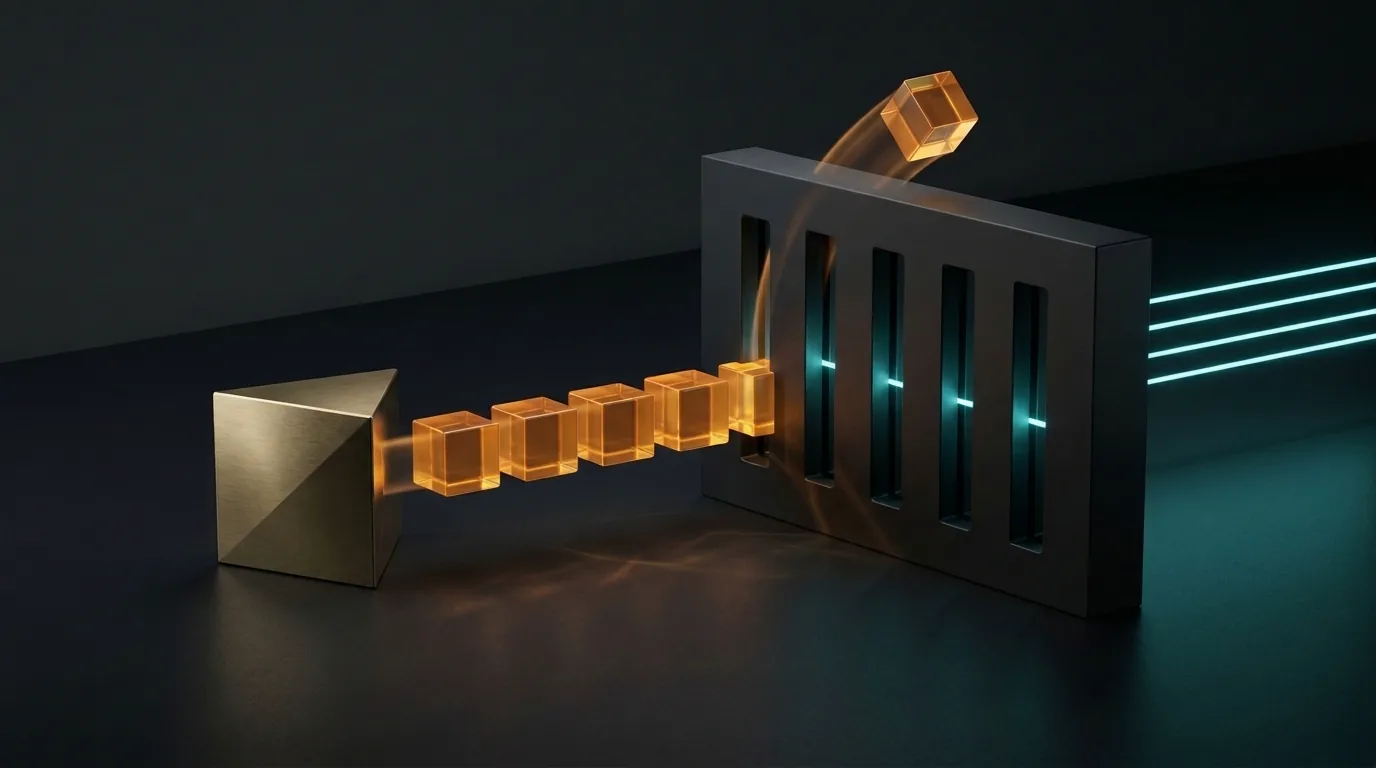
- Unsloth fuses RoPE, RMSNorm, MLP, cross-entropy, and manual autograd backward passes into custom Triton/CUDA kernels, commonly delivering 1.5–2.5x single-GPU speedups (up to 2–5x on select configs) and roughly 60% peak VRAM savings on local QLoRA models.
- Because official Unsloth depends on NVIDIA CUDA/Triton kernels, Mac developers fine-tune on Apple Silicon unified memory using Apple’s native mlx-lm stack or community FastLanguageModel wrappers (unsloth-mlx / mlx-tune) before exporting checkpoints to Ollama or MLX runtimes.
Hardware split: single consumer GPU vs multi-GPU FSDP2 clusters
Developers preparing to fine-tune open weights such as Qwen 3.8, DeepSeek checkpoints, or Nanbeige4.3-33B frequently treat Unsloth vs Axolotl as a winner-take-all comparison. As MarkTechPost’s fine-tuning benchmark and Local-LLM.net’s comparison establish, both Apache-2.0 projects occupy separate rungs on the hardware ladder.
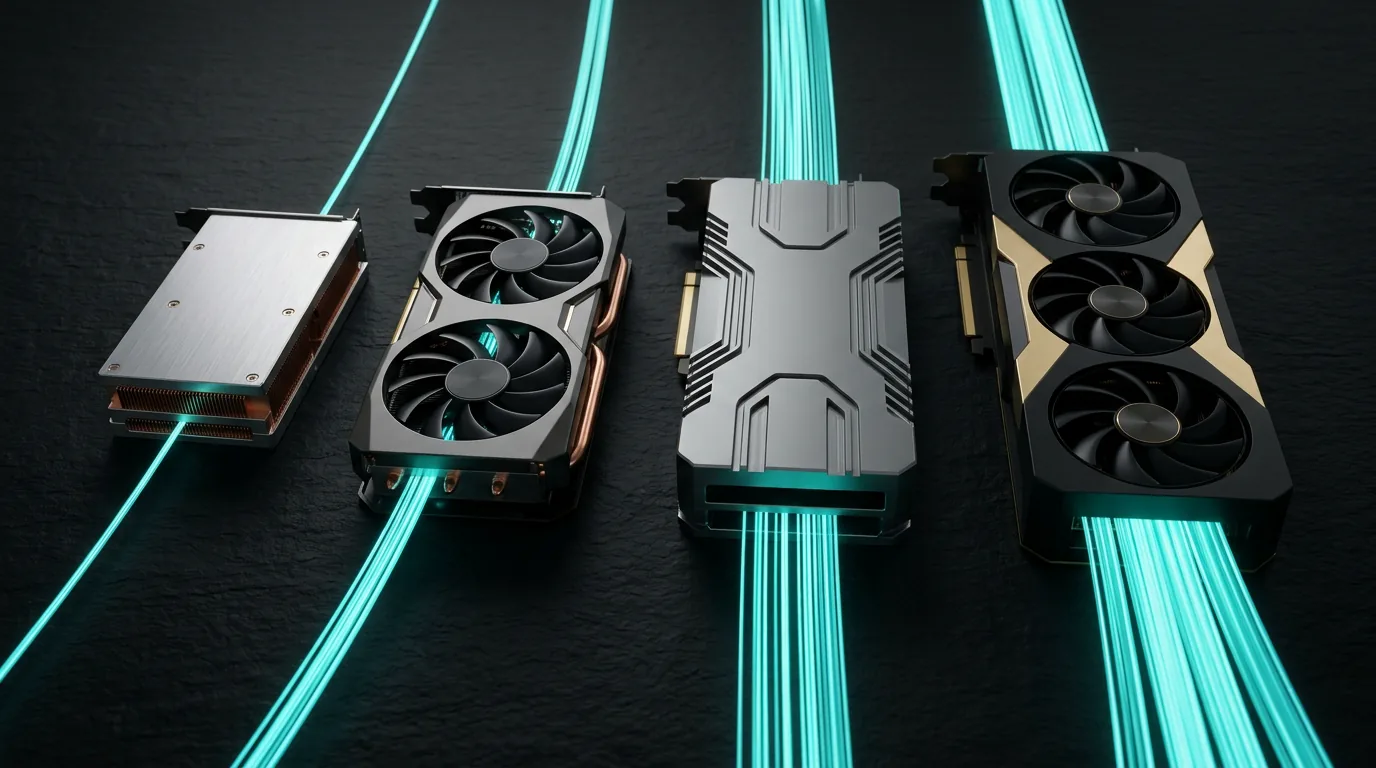
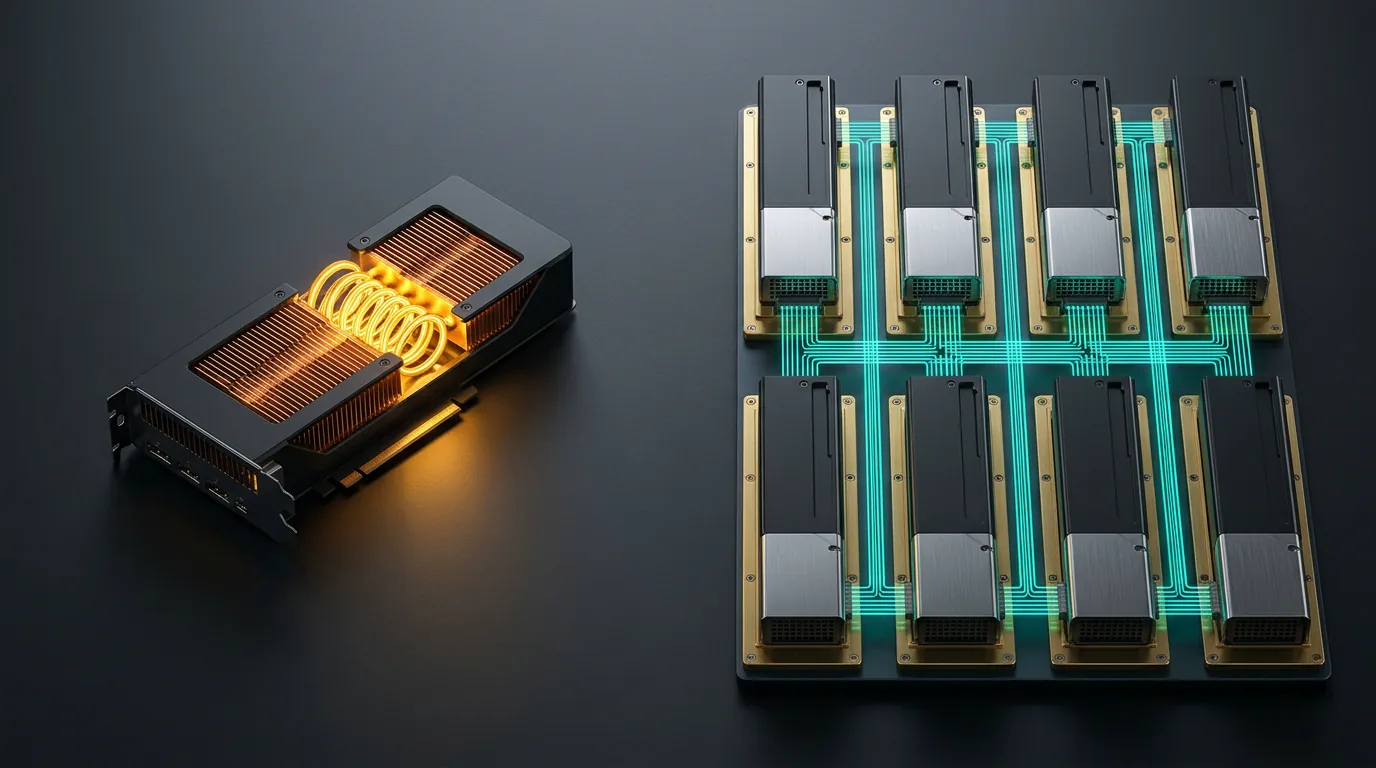
Unsloth (79,800+ GitHub stars) is built to squeeze maximum token throughput and context length out of a single NVIDIA card—turning a 24 GB RTX 3090 or 4090 into a viable QLoRA workstation. Axolotl (12,700+ stars) is built for multi-GPU and multi-node repeatability, orchestrating 4-GPU, 8-GPU, or multi-node H100/A100 training jobs where full-parameter fine-tuning or 70B+ parameter sharding exceeds single-card memory.
Custom CUDA/Triton kernels vs day-zero Hugging Face coverage
Unsloth achieves its single-GPU advantage by bypassing generic PyTorch autograd overhead. Rather than launching separate memory-bound kernels for attention, rotary embeddings, cross-entropy loss, and MLP projections, Unsloth replaces them with fused Triton kernels and hand-derived backward passes, yielding typical 1.5–2.5x training speedups (and 2–5x on favorable context lengths) alongside roughly 60% peak VRAM reduction (ranging 40–80% across batch and sequence shapes) without sacrificing mathematical accuracy.
The trade-off for kernel specialization is architecture lag: brand-new MoE or multimodal families (including cutting-edge releases tracked alongside Qwen4-Max and open-weight model releases) require explicit Unsloth kernel support to unlock peak gains. By contrast, Axolotl wraps Hugging Face Transformers, PEFT, and TRL directly, inheriting day-zero model compatibility while layering PyTorch FSDP2, DeepSpeed ZeRO Stages 1/2/3, sequence parallelism, and sample packing via declarative configuration.
Workflow ergonomics: Python API vs YAML—and Apple Silicon MLX fine-tuning
Ergonomically, Unsloth favors interactive Python scripts and Jupyter notebooks via FastLanguageModel.from_pretrained, plus built-in one-step export hooks directly to GGUF or Ollama Modelfiles for local serving—integrating smoothly with workflows in our Ollama vs LM Studio guide. Axolotl treats every run as a version-controlled YAML manifest capturing datasets, prompt templates, LoRA targets, learning-rate schedules, and distributed launch flags cleanly for CI/CD pipelines.
Mac developers working on unified-memory Apple Silicon face one crucial boundary: official Unsloth kernels require NVIDIA CUDA/Triton and do not run natively on Metal. Instead, local Mac fine-tuning runs natively on Apple’s mlx-lm framework, with community compatibility wrappers such as unsloth-mlx (standardized as mlx-tune) mirroring Unsloth’s FastLanguageModel Python syntax so teams can prototype LoRA adapters on a MacBook Pro before scaling onto CUDA—complementing the inference trade-offs in our GGUF vs MLX Apple Silicon benchmark.
Which fine-tuning stack belongs in your pipeline?
Start with Unsloth whenever your training runs on one 24 GB–80 GB NVIDIA GPU, you need long-context QLoRA without hitting out-of-memory crashes, or you want fast iteration exported straight to GGUF or vLLM.
Switch to Axolotl once datasets or 70B+ parameter counts demand 4–8+ GPUs using FSDP2 or DeepSpeed ZeRO-3, when you require standardized YAML experiment reproducibility across an ML engineering team, or when you want immediate support for newly released Hugging Face checkpoints on launch day.
Sources: unslothai/unsloth Repository (Apache 2.0)|GitHub ↗ axolotl-ai-cloud/axolotl Repository (Apache 2.0)|GitHub ↗ Axolotl Documentation (FSDP2 & DeepSpeed Configs)|Axolotl Docs ↗ ml-explore/mlx-lm Apple Silicon Fine-Tuning|GitHub ↗ Unsloth vs Axolotl vs TRL vs LLaMA-Factory Comparison|MarkTechPost ↗ Unsloth vs Axolotl Local LLM Guide|Local-LLM.net ↗
THE BROADER CONTEXT · FRONTIER LABS DOSSIER
Explore full product specifications, pricing analysis, and continuous coverage in the Frontier Labs Desk Hub and Qwen Dossier. Independent benchmarks available on the AI Intelligence Index and Coding Agents Leaderboard.