Alibaba Launches Qwen4-Max With 2.4T Sparse MoE, 1M Context, $1.50/$4.50 API Pricing, and Tighter Cyber Guardrails
Following November 11’s limited preview, Alibaba Cloud makes Qwen4-Max generally available as a proprietary 2.4-trillion-parameter sparse MoE (71B active) pairing Gated DeltaNet with sparse attention across 1M multimodal tokens.
THE STORY IN THREE POINTS
- Alibaba released production Qwen4-Max on November 16, 2026 across QwenCloud API, Model Studio, Token Plan, QwenWork, Qoder, Qwen Studio, and OpenRouter—updating the November 11–25 qwen4-max-preview doc to recommend Qwen4-Max for production.
- Under the hood, Qwen4-Max pairs a 2.4-trillion-parameter MoE backbone activating 71B parameters per token (25% fewer active base parameters than Qwen3.8-Max-Base) plus 328B N-gram embedding parameters, Gated DeltaNet layers, sparse attention, and a 1M multimodal context (text, image, video).
- Model Studio Singapore & OpenRouter cut list prices to $1.50/M input, $4.50/M output, and $0.075/M cached reads (vs $2/$6 for Qwen3.8-Max), and Alibaba reports 62% lower task costs on Work360 ($4.43 to $1.67) alongside filtered cyber-offense training data—without releasing weights.
From November 11 Token Plan preview to full 2.4T / 71B production release
Five days after opening limited access to qwen4-max-preview for Token Plan subscribers on November 11, Alibaba formally launched production Qwen4-Max on November 16, 2026. Alibaba Cloud updated its qwen4-max-preview documentation the same day—keeping the preview deprecation window at November 25 while explicitly recommending Qwen4-Max for active workloads. First-party distribution spans Model Studio pay-as-you-go APIs, Token Plan subscriptions, QwenWork, Qoder, and Qwen Studio, joined simultaneously on launch day by OpenRouter under model ID qwen/qwen4-max.
Alibaba disclosed a major structural revision beneath the flagship label compared with our earlier Qwen 4 pre-release tracker and 2.4T/95B Qwen 3.8-Max. Qwen4-Max runs on a 2.4-trillion-parameter sparse Mixture-of-Experts backbone that activates 71 billion parameters per token—25% fewer active base parameters than Qwen3.8-Max-Base—supplemented by a 328-billion-parameter N-gram embedding layer and hybrid Gated DeltaNet plus sparse attention layers to hold memory bandwidth down over long prompts. Native input spans text, images, and video across a 1,000,000-token context window, with reasoning active by default (high default tier across low, high, xhigh, and none options) and protocol compatibility spanning OpenAI Chat Completions, Responses, and Anthropic Messages endpoints.
Regional pricing tiers and Alibaba’s 62% Work360 cost-reduction math
Model Studio’s November 16 rate card lowers list prices 25% across uncached calls compared with Qwen3.8-Max ($2.00 input / $6.00 output). In Singapore (International) and on OpenRouter, Qwen4-Max bills a flat $1.50 per million input tokens and $4.50 per million output tokens across the full 0–1M token window, with explicit/implicit cache reads at $0.075 per million (5-minute cache writes at $1.875 and 1-hour writes at $3.00, with no free-tier quota). Across US (Virginia), Germany (Frankfurt), Japan (Tokyo), and Hong Kong Model Studio regions, list rates tick slightly lower to $1.413 input, $4.24 output, and $0.071 cached read ($1.767 / $2.827 writes), matching Alibaba’s unified Thinking and Non-Thinking pricing.
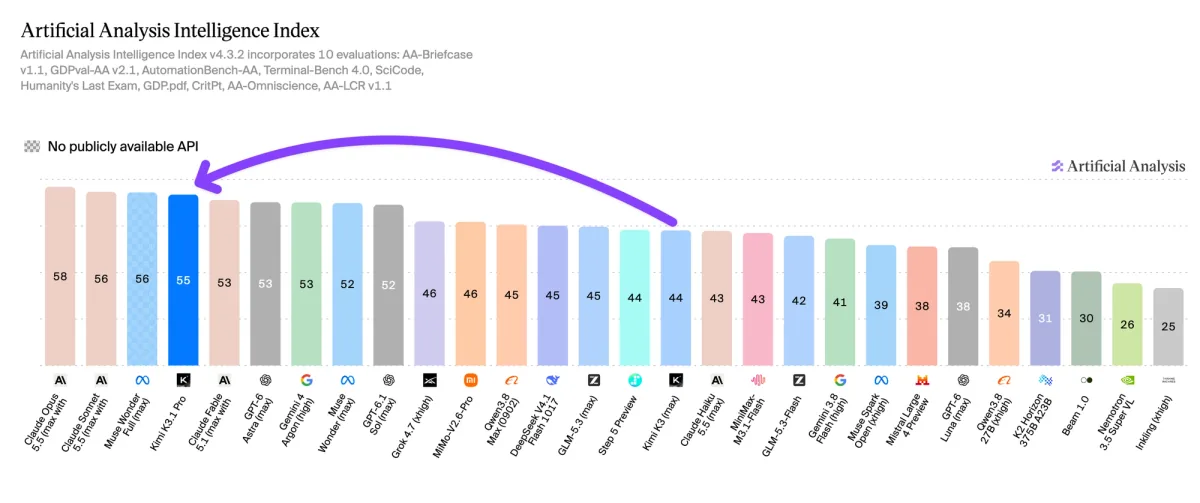
Token compression supplies the rest of Alibaba’s cost claim. On its internal Work360 evaluation spanning 26 work domains and 721 specialized fields, Alibaba reported Qwen4-Max scoring 52.69 versus 47.74 for Qwen3.8-Max while consuming roughly 24% fewer tokens at Xhigh effort and 35% fewer at High effort—lowering average cost per Work360 task from $4.43 to $1.67 (-62%, or RMB 26.58 to RMB 11.16, roughly 58%, in domestic reporting). On Terminal-Bench 4.0, Alibaba claimed 48% to 49% lower token consumption alongside cross-model comparisons against Claude Opus 5.5, GPT-6.1 Sol, GPT-6 Astra, and Kimi K3.1 across 16 tasks. Those 16-benchmark tables and Work360 scores remain vendor-reported pending independent re-runs on the Artificial Analysis and Arena leaderboards.
Purpose-filtered cyber guardrails, CBRN hardening, and proprietary weights
Alongside efficiency gains, Alibaba highlighted unusually explicit pre-training and post-training safety interventions for Qwen4-Max. For cybersecurity, training corpora were filtered by task intent—retaining vulnerability verification, detection, and patch remediation workflows while stripping exploit-generation and offensive attack material. In internal secure-coding tests measuring whether generated functions satisfied both functional and security requirements, Alibaba reported pass rates rising from 22.0% on Qwen3.8-Max to 31.8% on Qwen4-Max, while claiming dedicated CBRN post-training data produced no significant hazard uplift in expert testing.
For self-hosting teams, however, Alibaba kept its flagship closed. OpenRouter’s model record lists no Hugging Face checkpoint, and inspection of the official Qwen Hugging Face namespace on November 16 confirms public downloads still end with the November 7 Qwen 3.8 family—proprietary weights remain cloud-hosted only for Qwen4-Max, even as Alibaba indicated smaller open-weight Qwen4 releases will arrive on an unannounced schedule. Organizations deploying locally on-premise must stay on Apache-2.0 Qwen3.8-27B or follow our Qwen 3.8 Flash Next VRAM sizing guide and open-weights license verification framework until smaller Qwen4 checkpoints actually drop.
Sources: Qwen4-Max Official Launch Blog|Qwen Team ↗ Model Studio Model Inference Pricing (Qwen4-Max Regional Rate Cards)|Alibaba Cloud Docs ↗ qwen4-max-preview Documentation (Updated Nov 16 Recommending Production Qwen4-Max)|Alibaba Cloud Docs ↗ Qwen: Qwen4 Max API Listing & Parameters|OpenRouter ↗ Alibaba launches Qwen4-Max, cutting task costs by ~60% with cyber guardrails|MLQ.ai ↗ Alibaba launches Qwen4-Max with lower API prices and 1M context|TechNode ↗ Qwen Official Model Repositories (Confirming No Qwen4 Weights Yet)|Hugging Face ↗
THE BROADER CONTEXT · FRONTIER LABS DOSSIER
Explore full product specifications, pricing analysis, and continuous coverage in the Frontier Labs Desk Hub and Qwen Dossier. Independent benchmarks available on the AI Intelligence Index and Coding Agents Leaderboard.