Qwen 3.8 Flash Next VRAM Sizing, Quantization Benchmarks and Local Deployment Guide
A detailed hardware evaluation of Qwen 3.8 Flash Next sizing discrepancies, comparing 185GB FP8 cluster serving with 87GB to 96GB vLLM n-gram RAM offloading setups.

THE STORY IN THREE POINTS
- Full FP8 cluster serving of Qwen 3.8 Flash Next requires 185.6GB VRAM (and 360GB in BF16), demanding four 80GB enterprise GPUs such as NVIDIA H100 or H200 accelerators.
- Community 4-bit quantizations consume 115GB of total memory because the ~180B storage footprint combines a 125B backbone, 51B speculative n-gram lookup tables, and a 4B multi-token prediction (MTP) head.
- Offloading the 51B n-gram lookup tables to host system RAM via vLLM or SGLang reduces active GPU VRAM consumption to between 87GB and 96GB, while licensing follows qwen-community-1.0 rather than Apache 2.0.
Resolving the memory sizing discrepancy
Following the release of Qwen 3.8 Flash Next, community deployment reports displayed conflicting memory requirements ranging from 96GB up to 185GB of dedicated VRAM. The baseline unquantized FP8 distribution requires 185.6GB of contiguous accelerator memory (360GB in uncompressed BF16), necessitating at least four 80GB enterprise graphics processing units or eight 40GB nodes for production serving.
The architectural complexity arises from Qwen 3.8 Flash Next’s multi-component structure (~180B total parameter storage): a 125-billion-parameter primary reasoning backbone combined with a 51-billion-parameter speculative n-gram lookup matrix and a 4-billion-parameter multi-token prediction (MTP) head. In standard naive 4-bit GGUF (Q4_K_M) or AWQ conversions, all components remain loaded into accelerator memory, resulting in a minimum allocation footprint of approximately 115GB (and ~135GB in NVFP4).
RAM offloading and inference engine configurations
Engineers deploying on consumer or mid-tier enterprise workstations can reduce accelerator memory pressure by decoupling the n-gram prediction tables from the core transformer layers. In both vLLM and SGLang, passing explicit offload flags allows the host system to store the 51B speculative tables inside high-speed DDR5 system memory or NVMe SSDs.
Under this hybrid configuration, active GPU memory consumption drops to 87GB for INT4 weights and 96GB when provisioning standard KV-cache buffers for 32,000-token context lengths. Unified memory architectures such as NVIDIA DGX Spark or AMD Strix Halo workstations equipped with 128GB of unified RAM achieve consistent throughput of approximately 31.8 tokens per second using UD-IQ4_XS quantization (~102GB footprint).
Production deployment and licensing checklist
Teams planning on-premise execution must verify that host-to-device PCIe bandwidth is sufficient to prevent speculative latency bottlenecks when offloading lookup tables. Single 24GB or 32GB consumer graphics cards cannot execute the model under any known quantization scheme and must instead target the smaller 27B variant.
Furthermore, engineering and legal teams must note that Qwen 3.8 Flash Next is distributed under the custom qwen-community-1.0 license rather than Apache 2.0. For commercial API providers, running native FP8 clusters across four H200 instances remains the standard recommendation for achieving sub-20ms time-to-first-token latencies.
Sources: Qwen 3.8 Flash Next Model Cards & Quantization Metadata|Hugging Face Qwen ↗ vLLM Speculative Decoding & Host RAM Offload Documentation|vLLM ↗
THE BROADER CONTEXT · FRONTIER LABS DOSSIER
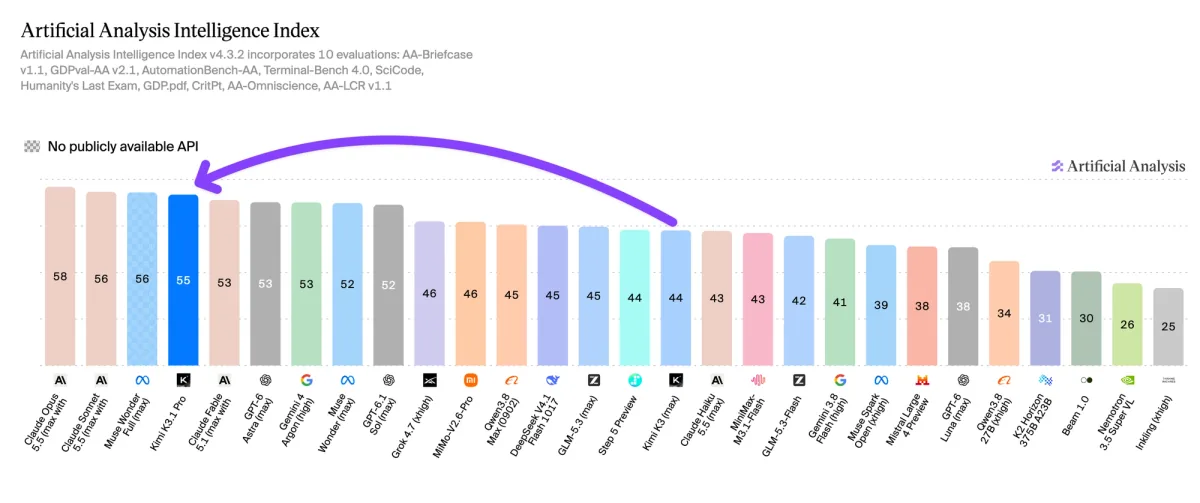
Explore full product specifications, pricing analysis, and continuous coverage in the Frontier Labs Desk Hub and Qwen Dossier. Independent benchmarks available on the AI Intelligence Index and Coding Agents Leaderboard.