Open Weight Models Explained: What "Open Weights" Means and How Kimi, DeepSeek and GLM Compare
Open weight models publish trained neural parameters you can download, self-host, and fine-tune without releasing raw training datasets or full training pipelines—with Kimi K3.1 Pro (#28 on AA Index v5.0.1), DeepSeek V4.1 Flash (#48), and GLM-5.3 (#49) illustrating sharp differences in MIT vs custom MaaS licenses.

THE STORY IN THREE POINTS
- Open weight models release downloadable post-training parameters and inference configs for local execution and fine-tuning, differing both from API-only closed weights (like Qwen4-Max or GPT-6) and full Open Source AI under OSI’s OSAID 1.0 (which mandates OSI-licensed training code and reconstructible data provenance).
- Checking Hugging Face repositories directly reveals split licensing among November 2026 leaders: DeepSeek V4.1 Flash and GLM-5.3-Flash ship under standard MIT, Kimi K3.1 Pro imposes a $20M MaaS revenue threshold under its custom license, and flagship GLM-5.3 requires security review for >$10B MaaS operators.
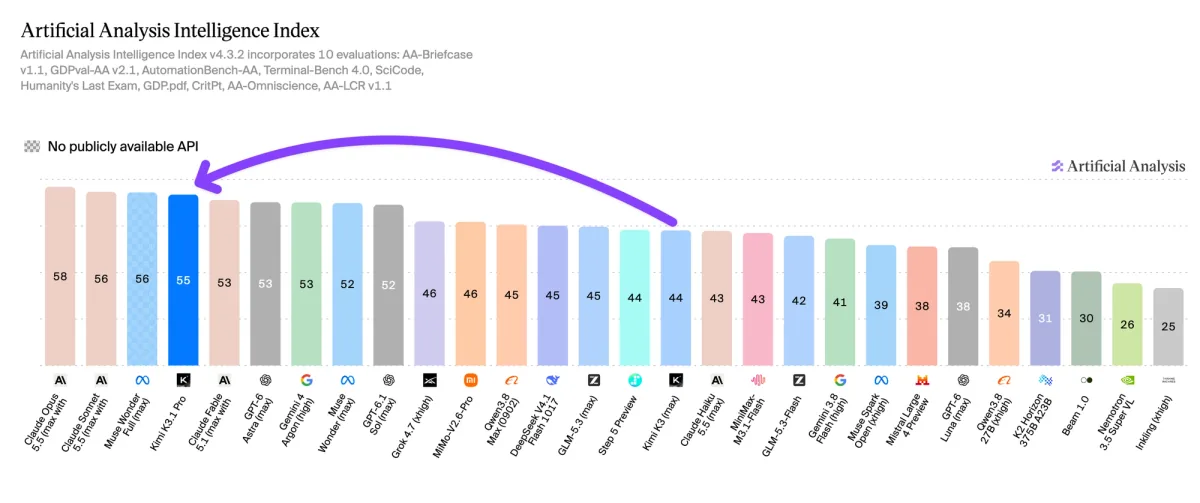
- On Artificial Analysis’s Intelligence Index v5.0.1 (Snapshot Nov 14, 2026), top downloadable open-weight performers rank Kimi K3.1 Pro #1 open weight (#28 overall, score 46), DeepSeek V4.1 Flash 1017 Max #2 (#48, score 33), GLM-5.3 Max #3 (#49, score 32), Inkling 2 Small #4 (score 31, Apache-2.0), and Qwen3.8-Flash-Next (score 29).
What are open weight models—and why open weights vs open source matters
Open weight models are artificial intelligence systems whose trained neural network parameters ("weights") and inference architecture configuration files are published publicly for anyone to download, inspect, run on private hardware, or fine-tune. Unlike closed-weight proprietary models—where providers such as OpenAI (GPT-6 Astra), Anthropic (Claude Opus 5.5), or Alibaba’s flagship Qwen4-Max restrict checkpoints strictly behind metered cloud APIs—open weight models eliminate vendor hosting lock-in, air-gap data safely on local GPUs, and allow weight quantization (NVFP4, MXFP8, AWQ, GGUF).
Understanding open weight models meaning requires separating downloadable weights from true Open Source AI as defined by the Open Source Initiative (OSI). Published on October 28, 2024, the Open Source AI Definition (OSAID 1.0) establishes that true open source AI requires three pillars: (1) complete training, validation, and preprocessing code under an OSI-approved license, (2) downloadable parameters, and (3) sufficiently detailed data information explaining training sources, filtering, and curation so skilled teams can train an equivalent model. Because frontier open-weight labs routinely withhold pre-training corpora and RL recipes to protect competitive advantage or licensing compliance, nearly all leading releases in 2026 remain open-weight rather than full open-source AI—a legal boundary explored alongside our OSAID 1.0 deep dive and commercial territory restriction matrix.
Kimi K3.1 Pro vs DeepSeek V4.1 Flash vs GLM-5.3: licenses, code, and training data
Inspecting individual Hugging Face repositories shows why teams cannot assume uniform rights across top open-weight checkpoints. Moonshot AI’s Kimi K3.1 Pro (huggingface.co/moonshotai/Kimi-K3.1-Pro, released November 4, 2026 as a 2.8T-total / 104B-active MoE in MXFP4 with 1M context) permits broad research and internal commercial deployments, but attaches a bespoke Kimi K3.1-Pro License demanding a separate commercial agreement once hosted Model-as-a-Service (MaaS) annual revenue exceeds $20 million plus mandatory attribution above major product-scale thresholds; neither its full pre-training dataset nor end-to-end training code is open. DeepSeek’s DeepSeek-V4.1-Flash-1017 and V4-Pro-0813 publish weights cleanly under a standard permissive MIT license alongside the Apache-2.0 DeepInfer inference core, yet omit pre-training corpora and full RL pipelines.
Z.ai’s November GLM-5.3 family splits licensing inside a single series: lightweight multimodal zai-org/GLM-5.3-Flash (320B total / 18B active MoE) distributes under standard MIT terms with minimal restrictions, whereas flagship text-only zai-org/GLM-5.3 uses a custom GLM-5.3 License obligating prior Z.ai security review for MaaS providers surpassing $10 billion in trailing 12-month group revenue (again releasing inference configs and weights without pre-training data). Meanwhile, other recent releases span permissive Apache-2.0 (Thinking Machines Inkling 2 Small 594B, OpenAI gpt-oss-120b, Alibaba Qwen3.8-27B) and MIT (Meituan LongCat 2.5) over to territory-excluding custom agreements (MiniMax H3-Image, Baidu ERNIE 5.5).
Open weight models leaderboard: Artificial Analysis v5.0.1 vs closed-weight frontier
Benchmarking open weight models vs closed weight models on the Artificial Analysis Intelligence Index v5.0.1 (November 14, 2026 snapshot, mirrored against Artificial Analysis’s Open Source Models tracker) quantifies the remaining gap and cost efficiency. Leading open-weight entries sit roughly 15–20 points behind Claude Fable 5.2 (65) and Gemini 4 Carbon (60), led globally by Moonshot Kimi K3.1 Pro at #28 overall (score 46, $3.68/task), DeepSeek V4.1 Flash 1017 Max at #48 (score 33, $0.60/task), Z.ai GLM-5.3 Max at #49 (score 32, $5.01/task), Thinking Machines Inkling 2 Small at #53 (score 31, $1.18/task), InclusionAI Ling 3.1 Flash at #58 (30), and Alibaba Qwen3.8-Flash-Next at #62 (29, $0.57/task).
Rounding out the open-weight cohort are GLM-5.3-Flash (#65, score 28), Mistral Large 4 High (#68, score 26), Meta Muse Spark Open (#70, score 25), DeepSeek V4 Pro 0813 (#76, score 23), Qwen3.8-27B Xhigh (#81, score 20), and OpenAI gpt-oss-120b High (#111, score 4). Note that Alibaba’s November 16 Qwen4-Max flagship currently runs closed-weight only (with smaller Qwen4 checkpoints yet to publish weights), leaving Kimi K3.1 Pro and MIT-licensed DeepSeek V4.1 Flash / GLM-5.3-Flash as the immediate open-weight production leaders. Check our Coding Agents Index as well when choosing weights inside Kimi Code CLI (48.6) or DeepSeek Harness (36.8).
Sources: The Open Source AI Definition 1.0 (OSAID 1.0)|Open Source Initiative ↗ Comparison of Open Source & Open-Weight AI Models|Artificial Analysis ↗ moonshotai/Kimi-K3.1-Pro Repository & Custom License|Hugging Face ↗ deepseek-ai/DeepSeek-V4.1-Flash-1017 (MIT License)|Hugging Face ↗ zai-org/GLM-5.3 & GLM-5.3-Flash Repositories (License Split)|Hugging Face ↗
THE BROADER CONTEXT · FRONTIER LABS DOSSIER
Explore full product specifications, pricing analysis, and continuous coverage in the Frontier Labs Desk Hub and GLM Dossier. Independent benchmarks available on the AI Intelligence Index and Coding Agents Leaderboard.