Qwen vs Llama: Coding Benchmarks, Context & Licenses
Open-weight selection in late 2026 divides cleanly between Alibaba’s Apache-2.0 Qwen3.8-27B (61.7% SWE-bench Pro on 24 GB VRAM) and Meta’s Llama 4 Scout (10M context window)—alongside strict Llama 4 EU commercial licensing exclusions.
THE STORY IN THREE POINTS
- Short verdict: choose Qwen (specifically Apache-2.0 Qwen3.8-27B and the Qwen3/3.8 family) for single-GPU 24 GB local coding, permissive global commercial deployment, and agentic tool reliability; choose Meta’s Llama 4 Scout (109B total / 17B active MoE) strictly for extreme 10-million-token long-context retrieval outside EU legal boundaries.
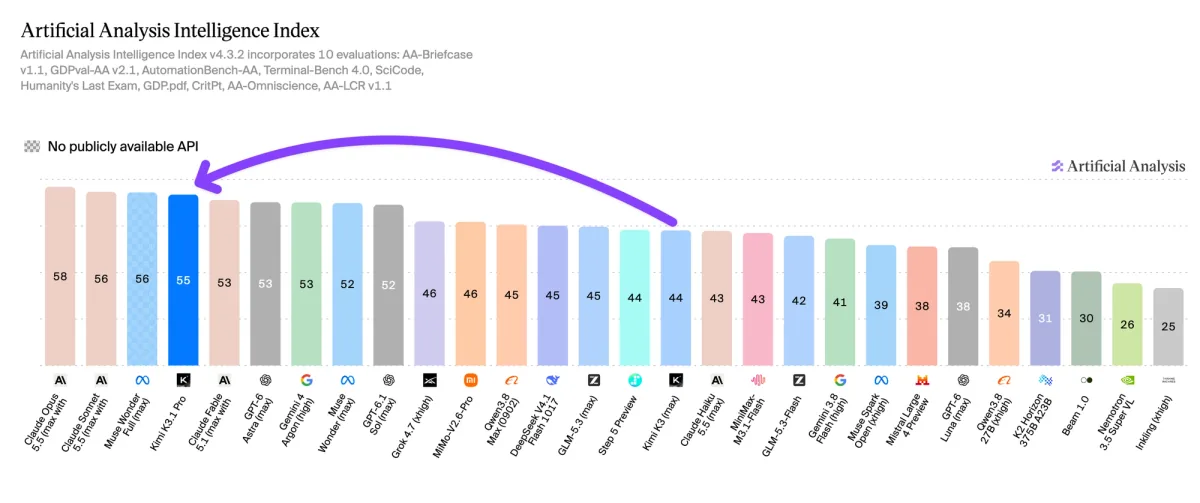
- On software engineering benchmarks, Qwen3.8-27B reaches 61.7% on SWE-bench Pro (#44 on WebDev Arena at 1589±6 and #86 on Text Arena at 1437±4) while fitting inside ~18 GB Q4 quantizations—whereas Meta’s newer frontier investments have largely shifted from Llama 4 toward the Muse model series.
- Licensing terms create a decisive compliance boundary: Alibaba’s open-weight Qwen releases ship under standard Apache 2.0 with no geographic or MAU carve-outs, while the Llama 4 Community License enforces a 700M-MAU threshold and explicitly bars individuals domiciled in or companies headquartered in the European Union from using its multimodal weights.
Specs, licensing, and strategic divergence between Qwen and Llama 4
As PromptQuorum’s November 16 open-weight comparison notes, many Qwen vs Llama primers still compare 2024 Qwen 2.5 and Llama 3.3 checkpoints—missing both Qwen3.8’s coding leap and Meta’s subsequent transition from Llama 4 toward Muse Spark Open (816B/42B) and Muse Glimmer 30B. Within the classic Qwen vs Llama decision, engineering teams face an unusually sharp trade-off between coding efficiency, context horizon, and legal clarity.
Alibaba publishes open-weight Qwen releases—including dense 27B Qwen3.8-27B and smaller Qwen3/3.8 tiers—under an unmodified Apache 2.0 license with zero monthly-active-user caps or regional bans (keeping proprietary Qwen4-Max as a separate API tier). By contrast, Meta’s Llama 4 Community License pairs a custom 700M-MAU commercial threshold with an explicit European Union restriction blocking EU-domiciled individuals and EU-headquartered enterprises from exercising rights over Llama 4’s multimodal materials.
SWE-bench Pro and local 24 GB agentic coding efficiency
In pure software engineering, Spheron’s open-weight engineering review and Hugging Face model cards establish Qwen’s decisive advantage per gigabyte of VRAM. Dense multimodal Qwen3.8-27B records 61.7% on Scale AI’s harder SWE-bench Pro (outperforming earlier generation flagships several times its size) and achieves #44 on Arena WebDev (1589±6) and #86 on Text Arena (1437±4).
Equally practical for solo developers and mid-market engineering teams, Qwen3.8-27B quantizes cleanly to ~18 GB in 4-bit GGUF/EXL2 formats—running entirely inside one 24 GB RTX 3090 or 4090 with room left for 64K agent context. Llama 4 Scout (109B total / 17B active MoE) and larger Maverick configurations require substantially heavier host memory or multi-GPU setups even when active FLOPs per token stay moderate.
Llama 4 Scout’s 10M context window vs Qwen’s deployment footprint
Where Llama 4 Scout retains an unmistakable architectural niche is extreme context length: Scout natively supports up to 10 million tokens in a single pass, designed for ingesting sprawling legal discovery archives, multi-year financial filings, or massive multi-repository snapshots without brittle chunked RAG retrieval.
Outside dedicated 10M-token batch ingestion, however, sustaining multi-million-token KV caches demands massive HBM pools or tiered host-RAM offloading via engines like vLLM or SGLang—whereas Qwen3.8 Flash and Qwen3.8-27B target practical 128K–256K context windows tuned for low-latency coding loops and structured JSON tool execution.
Multimodal native support and EU enterprise compliance
Both Qwen3.8-27B and Llama 4 Scout/Maverick adopt native multimodal early-fusion architectures capable of parsing UI screenshots, diagrams, and PDF pages directly without brittle external OCR bridges. Yet that exact multimodal classification triggered Llama 4’s EU exclusion clause as Meta sought to avoid EU AI Act compliance exposure for multimodal open weights.
For European startups, global SaaS vendors serving EU customers, or regulated enterprises requiring clean OSI-compatible legal review, Apache-2.0 Qwen checkpoints—evaluated alongside other permissive weights in our open-weight licensing explainer—represent the safer global production baseline.
Sources: Qwen vs Llama vs Mistral Local LLM Comparison|PromptQuorum ↗ DeepSeek vs Llama 4 vs Qwen3 Engineering Breakdown|Spheron ↗ Qwen Official Model Repository (Apache 2.0 & Qwen3.8-27B)|Hugging Face ↗ Llama 4 Community License & EU Restrictions|Meta Llama ↗
THE BROADER CONTEXT · FRONTIER LABS DOSSIER
Explore full product specifications, pricing analysis, and continuous coverage in the Frontier Labs Desk Hub and Qwen Dossier. Independent benchmarks available on the AI Intelligence Index and Coding Agents Leaderboard.