Open Source Claude Code Alternatives: Tested Tools & Licenses
Anthropic’s public Claude Code repository ships under an All-rights-reserved license, driving developers toward OSI-approved MIT and Apache-2.0 coding agents—including OpenCode, Cline, Aider, Qwen Code, OpenAI Codex CLI, goose, Kilo Code, and OpenHands.

THE STORY IN THREE POINTS
- Despite hosting a public anthropics/claude-code GitHub repository with plugins and changelogs, Claude Code’s LICENSE.md reads "All rights reserved" under Commercial Terms—making MIT and Apache-2.0 tools essential for teams needing forkable, auditable agent harnesses.
- In the terminal-only vs IDE split: OpenCode (MIT, #20 on Coding Agents with GLM-5.3), Aider (Apache-2.0), Qwen Code (Apache-2.0), and Codex CLI (Apache-2.0) run headless or TUI loops, while Cline (Apache-2.0 core IDE/CLI, closed JetBrains plugin) emphasizes per-step approval dialogs.
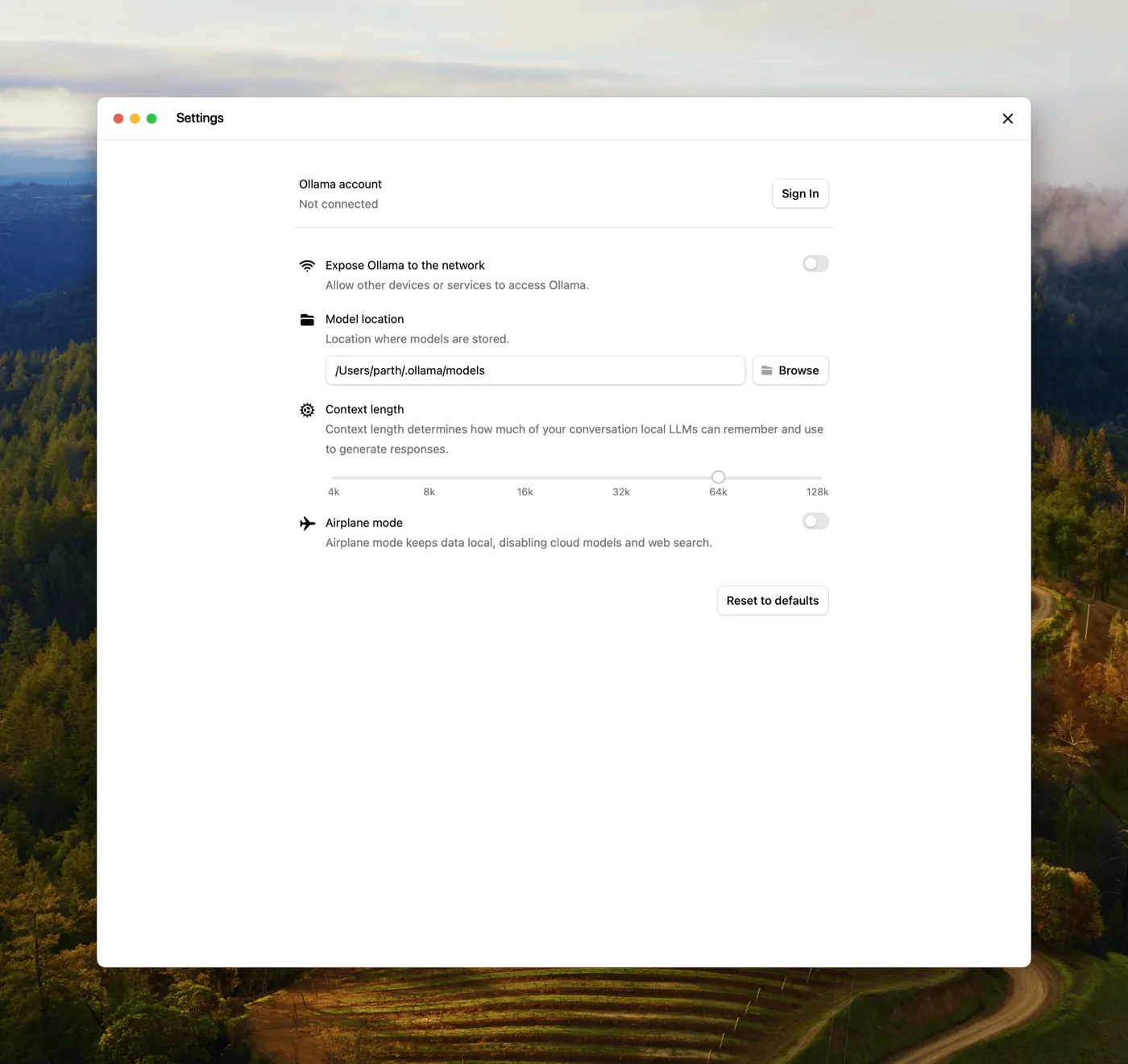
- Teams migrating to local Ollama or vLLM weights must avoid two recurring traps: Anthropic explicitly prohibits third-party tools from authenticating via consumer Claude Pro/Max OAuth plugins, and Ollama’s 4,096-token default silently truncates agent context unless overridden.
Why Claude Code’s public repo is not open source—and what OSI criteria filter out
Demand for open source Claude Code alternatives and free Claude Code alternatives stems from two practical bottlenecks: proprietary quota ceilings and license restrictions. While Anthropic maintains a public GitHub issue tracker and plugin catalog under anthropics/claude-code, its repository LICENSE.md states "© Anthropic PBC. All rights reserved. Use is subject to Anthropic’s Commercial Terms of Service." Developers can inspect plugin templates and track releases, but cannot legally fork, audit, or redistribute the core agent binary itself.
Evaluating true alternatives against the Open Source Initiative’s Open Source Definition—specifically Criterion 6 prohibiting discrimination against fields of endeavor—filters out several source-available contenders documented in Safeguard’s October 2026 license audit. Charm’s Crush CLI ships under FSL-1.1-MIT, which blocks competing commercial uses for two years before converting to MIT. Meanwhile, previously popular Apache/MIT projects including Continue (now read-only and unmaintained) and Roo Code (archived May 15, 2026) require caution unless teams intend to maintain private forks.
Aider vs Cline vs OpenCode vs Qwen Code: license, runtime, and approval defaults
Comparing Aider vs Cline vs OpenCode vs Qwen Code clarifies how open-source harnesses trade terminal velocity against human-in-the-loop safety. OpenCode (MIT license) mirrors Claude Code’s terminal interface most closely, pairing a multi-agent TUI (build agent, read-only plan agent, background subagents launched by default in v2.3.0) with Ollama, LM Studio, and 75+ providers while placing #20 on our Coding Agents Leaderboard at 40.1 paired with GLM-5.3 (Max); Kilo Code forks OpenCode’s CLI under MIT to add JetBrains and Cloud Agents (note kilo run --auto bypasses prompts). Qwen Code (Apache-2.0, originally forked from Gemini CLI v0.8.2 before Google’s Antigravity CLI transition) runs across terminal, desktop, and IDE with direct support for Ollama and vLLM endpoints alongside OpenAI, Anthropic, and Qwen API keys.
By contrast, Aider (Apache-2.0) operates as a git-native terminal pair programmer that binds explicit /add file sets to clean, automatic git commits—though organizations should inspect maintenance cadence carefully given sporadic PyPI releases such as v0.86.2 in February 2026. Cline (Apache-2.0 across VS Code extension, CLI with headless CI mode, desktop app, and SDK—noting only its JetBrains plugin stays closed-source) takes the strictest default posture: prompting humans to approve every file modification and shell command before execution. Rounding out the OSI roster, OpenAI Codex CLI (Apache-2.0, defaulting to network-disabled workspace sandboxes and supporting local --oss inference), Linux Foundation-backed goose (Apache-2.0, careful that Autonomous Mode runs by default unless switched with /mode approve), and MIT-licensed OpenHands Docker containers give platform teams full container isolation options.
Local Ollama/vLLM sizing and subscription compliance rules
Switching to an open-source coding agent unlocks zero-key local execution against MIT and Apache-2.0 checkpoints such as DeepSeek V4.1 Flash, Qwen 3.8, or GLM-5.3-Flash, or zero-cost API rotation via OpenCode Console. However, Safeguard’s audit highlights a fatal local-configuration error: Ollama ships with a 4,096-token default context window (OLLAMA_CONTEXT_LENGTH) that silently discards system prompts, tool schemas, and repository files once exceeded; teams running Codex CLI --oss, OpenCode, or Aider locally must raise the context window to at least 64K tokens or deploy dedicated vLLM continuous-batching instances.
On commercial compliance, engineers must avoid informal community wrappers that proxy consumer Claude Pro ($20/month) or Max ($100/month) OAuth cookies into OpenCode or third-party scripts: OpenCode’s own provider documentation warns that Anthropic explicitly prohibits subscription credential tunneling outside first-party clients. Use standard pay-as-you-go API keys, cloud Bedrock/Vertex contracts, or dedicated open-weight inference servers so audit trails remain clean.
Sources: Open-Source Claude Code Alternatives, With Licences Checked|Safeguard Blog ↗ OpenCode Official Repository (MIT License)|GitHub ↗ Claude Code Alternatives Comparison Guide|DataCamp ↗ The Open Source Definition & AI Standards|Open Source Initiative ↗
THE BROADER CONTEXT · FRONTIER LABS DOSSIER
Explore full product specifications, pricing analysis, and continuous coverage in the Frontier Labs Desk Hub and Qwen Dossier. Independent benchmarks available on the AI Intelligence Index and Coding Agents Leaderboard.