OpenCode 2.3.0 Defaults to Concurrent Background Subagents—and Ships Rotating Zero-Key Free Models
Now past 227K GitHub stars under MIT licensing, OpenCode v2.3.0 switches subagents to concurrent background execution, lengthens Ollama/LM Studio discovery timeouts to 15s, and rotates temporary zero-key Console models.
THE STORY IN THREE POINTS
- OpenCode v2.3.0 (released November 13 under MIT licensing, now over 227K GitHub stars) makes subagents run asynchronously in the background by default, folds tool chains into single collapsible activity rows, and adds Cmd/Ctrl+Alt+G prompt jump search.
- Its built-in build (full workspace write/shell), plan (read-only planning), and @general / @explore subagents pair with 15-second local endpoint discovery across Ollama, LM Studio, and vLLM plus Console BYOK or zero-key free tiers.
- Crucially, OpenCode’s free models are client-locked to OpenCode and constantly rotate—growing from roughly a dozen slots at release to 15 active Console entries (including Hy4 flash Free) by November 16, with divergent retention policies.
What OpenCode v2.3.0 shipped: Background subagents, quieter transcripts, and local discovery
Expanding well beyond its companion OpenCode Browse Chromium extension, Anomaly’s core open-source coding agent has surged past 227,100 GitHub stars under permissive MIT licensing—positioning OpenCode as the primary open-source alternative to Anthropic’s Claude Code. Shipped on November 13, 2026, OpenCode v2.3.0 makes two major runtime changes by default: subagents no longer block the parent loop, instead returning a session ID immediately, working concurrently in the background, and reporting back when idle; and TUI verbosity now defaults to low, summarizing long chains of tool calls and reasoning thoughts into a single collapsible activity row.
Developer quality-of-life and local hardware updates round out v2.3.0 cleanly. Desktop users gain a Jump to message palette command (Cmd+Alt+G / Ctrl+Alt+G) searching across unrendered session history, while local inference pipelines get a critical reliability bump: model auto-discovery across Ollama, LM Studio, and vLLM now waits up to 15 seconds per request instead of failing after 1 second on tunneled or slow home workstations, alongside LM Studio decision-model support and a fix ensuring idle subagents explicitly report ongoing background child work before parents treat partial answers as done.
Inside the built-in loop: build vs. plan modes and @general delegation
In daily terminal coding, OpenCode splits control cleanly across built-in agents toggled with Tab or invoked by mention. The primary build agent holds read, write, and shell execution privileges by default (pausing for approval on sensitive environment files), whereas the primary plan agent inspects files and writes plans without touching repository code unless explicitly requested. For parallel research and file exploration, users or primary agents invoke subagents including general (@general, broad tool access without recursive subagent spawning) and explore (strictly read-only code and web lookup).
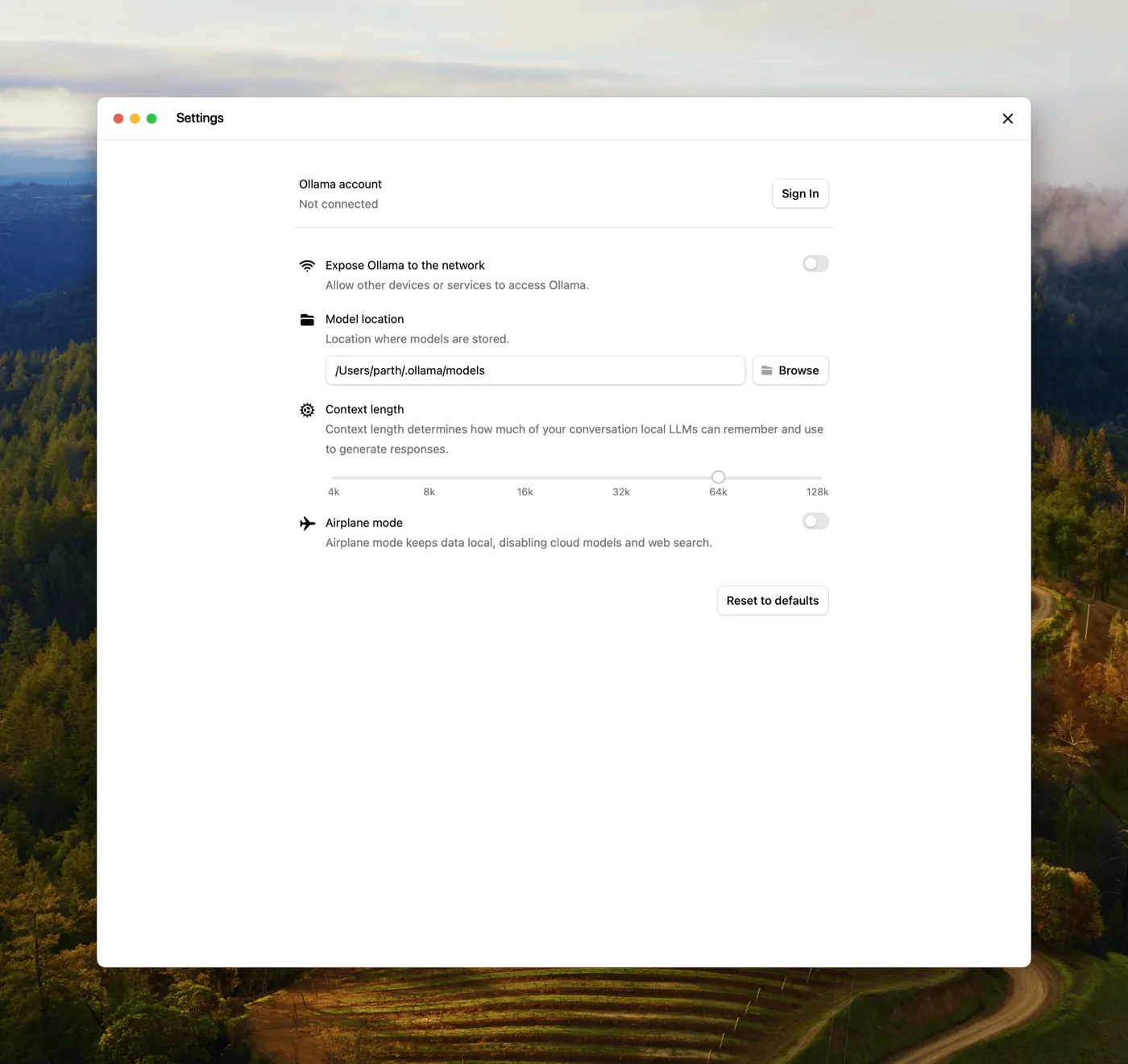
For local Ollama deployments in particular, developers must still watch context-window defaults carefully. While OpenCode supports over 200 providers through models.dev, official provider adapters, and OpenCode Go / Console routing, connecting to default Ollama endpoints with 4K fallback windows often stalls once system prompts and multi-file tool schemas load—requiring explicit 16K–32K context definitions in Ollama configs alongside v2.3.0’s longer discovery timeout.
Free models without an API key: Why the roster shifts and privacy rules differ
A major driver behind current searches ("opencode vs claude code", "opencode 2", "opencode free") is OpenCode’s out-of-the-box access to hosted models requiring no account or API key. Checking OpenCode’s live Console documentation on November 16 exposes two guardrails developers frequently miss: first, free-tier endpoints strictly require running inside OpenCode clients and will not serve arbitrary third-party harnesses; second, the catalog continuously rotates.
Whereas v2.3.0 announcements highlighted roughly 12 free slots, live Console docs on November 16 already list 15 limited-time free models—including newly launched Hy4 flash Free alongside GLM-5.3-Flash Free, DeepSeek V4.1 Flash Free, MiniMax M3.1 Flash Free, LongCat 2.5 Free (100 req/day, China-hosted), MiMo-V2.6-Flash Free, three Nemotron models, Inkling 2 Small Free, Big Pickle, and Iceman Free—replacing retired slots like Crouton Alpha Free (Nov 9). Data policies also vary sharply across those free models: while most follow zero-retention rules, Big Pickle, Iceman Free, and Inkling 2 Small Free allow prompt retention or training feedback (with Inkling excluding EU/EEA nations and Beam Free enforcing 30-day retention). Teams under strict corporate compliance can strip every free endpoint from the catalog by setting OPENCODE_DISABLE_FREE_MODELS=1.
Sources: OpenCode v2.3.0 Release Notes|GitHub (anomalyco/opencode) ↗ anomalyco/opencode Repository & MIT License|GitHub ↗ OpenCode Homepage|OpenCode ↗ OpenCode Console Models, Free Roster & Privacy Policies|OpenCode Docs ↗ Built-In Build, Plan & Subagent Modes|OpenCode Docs ↗ Model Selection, Ollama & OPENCODE_DISABLE_FREE_MODELS|OpenCode Docs ↗
THE BROADER CONTEXT · FRONTIER LABS DOSSIER
Explore full product specifications, pricing analysis, and continuous coverage in the Frontier Labs Desk Hub and Others Dossier. Independent benchmarks available on the AI Intelligence Index and Coding Agents Leaderboard.