NorthCUA Models: Open Weights, Harness and Coordinate Handling
Beipo AI introduces the NorthCUA model family and open-source harness, using strict 0–1000 normalized coordinates and Apache-2.0 weights for desktop and browser GUI automation.
THE STORY IN THREE POINTS
- Beipo AI detailed the NorthCUA model family in a technical report on November 1, 2026 (arXiv:2611.02102); as of our verification, model weights are downloadable under Apache-2.0 alongside an open-source execution harness.
- The model family spans NorthCUA-Nano (9B Dense), NorthCUA-Mini (35B total / 3B active MoE), and NorthCUA-Pro (397B total / 17B active MoE), built on Qwen3.5.
- Visual action grounding uses a strict normalized_1000 coordinate space (0–1000), while the reported 88.64% OSWorld-Verified score represents an experimental RL research checkpoint.
Model family and checkpoints: Exploring the NorthCUA architecture
As graphical user interface automation advances, Beipo AI released its NorthCUA technical report on November 1, 2026 (revised November 4, arXiv:2611.02102). As of our November 10 audit, open-weight checkpoints are available on Hugging Face (beipo-ai/NorthCUA-Pro) under an Apache-2.0 license, supported by execution code on GitHub (beipo-ai/NorthCUA) for desktop and browser automation.
The NorthCUA architecture comprises three tiers: NorthCUA-Nano (9B Dense), NorthCUA-Mini (35B total / 3B active MoE), and NorthCUA Pro (397B total / 17B active MoE), developed on Qwen3.5 base foundations. Rather than a compact backbone, the flagship NorthCUA Pro checkpoint is a large-parameter MoE designed to balance broad multimodal understanding with focused GUI action prediction.
Coordinate interface: Implementing NorthCUA normalized coordinates
Operating system interaction requires precise mapping between visual display pixels and model action outputs. NorthCUA enforces a strict coordinate contract known as NorthCUA normalized coordinates (normalized_1000). Across all interactions, the NorthCUA normalized 1000 coordinate space maps target positions to an integer range of 0–1000 along both horizontal and vertical axes rather than raw pixel counts.
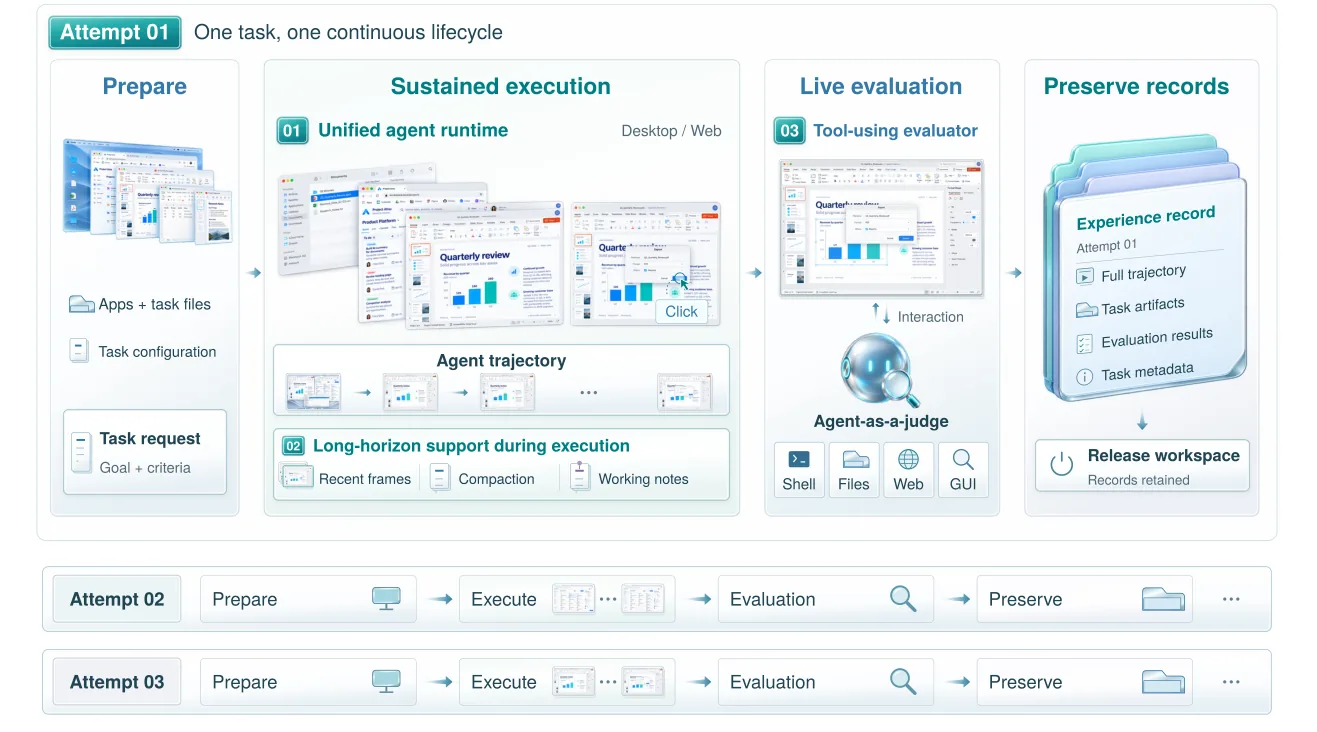
This convention governs the interface between the model and the official NorthCUA harness. When the model outputs an action like click(500, 500), the harness converts those normalized values to physical display pixels at execution time based on the active viewport. While this contract standardizes the interaction protocol across varying screen sizes, developers should recognize that interface normalization does not guarantee zero-shot immunity to display scaling discrepancies or dynamic UI shifts.
Auditing research scores: The NorthCUA 88.64 benchmark and OSWorld context
Community analysis frequently references the NorthCUA 88.64 benchmark result. Primary documentation confirms that the NorthCUA 88.64 score represents an experimental RL checkpoint evaluated on 361 tasks of OSWorld-Verified with an action budget of 100 steps per task. The NorthCUA model card explicitly notes that these reported research numbers have not been tied to an exact public checkpoint export and do not represent new measurements of the public files.
Developers deploying NorthCUA open weights should run models within the official NorthCUA harness (hosted at github.com/beipo-ai/NorthCUA, superseding the legacy migration repository) to ensure accurate prompt formatting and coordinate translation. For broader context on operating system agent testing, see our detailed reports on OSWorld-Verified benchmark results and computer use agent evaluation frameworks.
Sources: NorthCUA Technical Report: Visual Agent Modeling & Harness|arXiv ↗ NorthCUA-Pro Open Weights & Model Card Specification|Hugging Face ↗ NorthCUA Agent Harness & Execution Environment Repository|GitHub ↗
THE BROADER CONTEXT · FRONTIER LABS DOSSIER
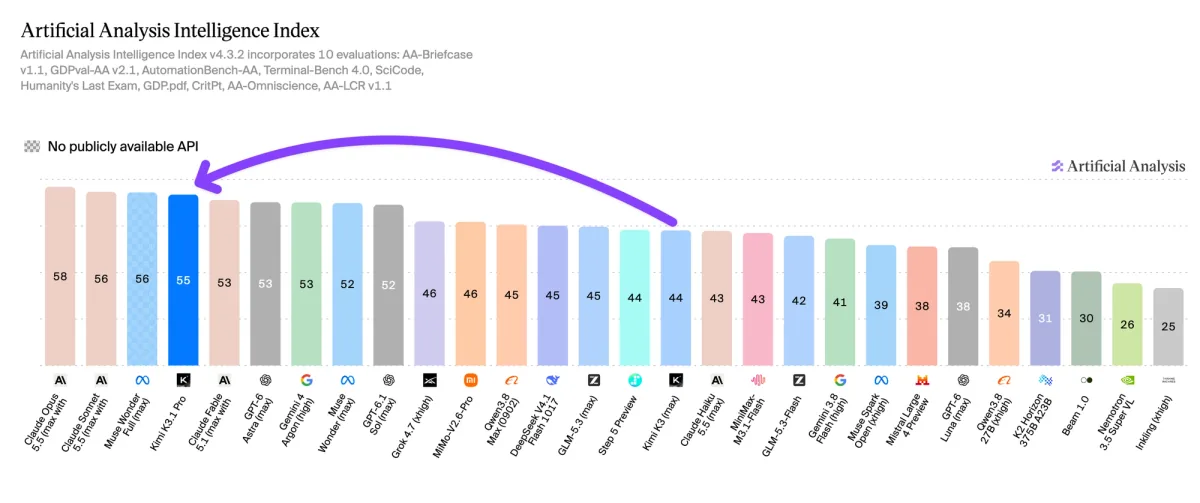
Explore full product specifications, pricing analysis, and continuous coverage in the Frontier Labs Desk Hub and Others Dossier. Independent benchmarks available on the AI Intelligence Index and Coding Agents Leaderboard.