DeepSeek vs Qwen: Open-Weight Models, Coding & Licenses
DeepSeek vs. Qwen compared in late 2026: DeepSeek V4.1-Flash (552B MoE, 384K output, MIT) and V4-Pro vs. proprietary Qwen3.8-Max and Qwen4-Max plus Apache-2.0 Qwen3.8-27B local checkpoints across benchmarks, hardware, and licensing.
THE STORY IN THREE POINTS
- Architectural split: DeepSeek concentrates on inference efficiency and uniform MIT open weights (552B V4.1-Flash and 1.6T V4-Pro), whereas Alibaba’s Qwen splits between proprietary hosted flagships (Qwen3.8-Max and GA Qwen4-Max) and Apache-2.0 local/multimodal weights (Qwen3.8-27B, Qwen3-Coder, Qwen3-Embedding).
- Frontier benchmark near-tie: VandaTeam’s late-November comparison puts DeepSeek-V4.1-Flash at 159.4 vs. Qwen3.8-Max at 157.6 on the Epoch Capabilities Index, while Qwen3.8-Max leads Text Arena (1,485 Elo on Nov 22 per VandaTeam; 1,486±4 in our Nov 18 snapshot vs. 1,463 for V4.1-Flash).
- Hardware and licensing decision: Qwen3.8-27B (18GB Ollama Q4, Apache 2.0) dominates 24GB GPUs and 32GB Macs, whereas DeepSeek V4.1-Flash excels at cloud/cluster coding with 384K max output, DeepInfer/DualPath cache efficiency, and $0.03/$0.12 API pricing.
Architectural split: focused MIT MoE vs. Qwen’s hybrid full-stack portfolio
Comparing DeepSeek and Alibaba’s Qwen in late 2026 highlights a sharp strategic divergence in model architecture and distribution. DeepSeek channels engineering into lowering active decode compute and KV-cache footprint across two uniform MIT-licensed Mixture-of-Experts (MoE) checkpoints: DeepSeek V4.1-Flash (launched September 10 and updated 1017 on October 17, combining 552B total MoE parameters with ~8B prefill / ~16B decode active compute plus 196B Engram conditional memory and native vision) and DeepSeek V4-Pro (1.6T total / 49B active CSA+HCA+mHC MoE), alongside the earlier 284B / 13B active V4-Flash—all supporting a 1-million-token context window.
Alibaba’s Qwen spans the broadest modality and hardware ladder in the industry, but splits sharply between open weights and closed API tiers. Its downloadable open checkpoints—led by Qwen3.8-27B (dense Apache 2.0, 262,144-token context), Qwen3-Coder-30B-A3B, and Qwen3.8-Flash-Next (a 180B hybrid package under qwen-community-1.0 requiring 185.6GB FP8 or 87–96GB INT4 offloaded)—contrast with its 2.4-trillion-parameter flagship tier.
Crucially, both flagship Max models—Qwen3.8-Max (95B active, 0902 API snapshot) and production Qwen4-Max (2.4T total / 71B active + 328B N-gram embedding, Gated DeltaNet + sparse attention, launched GA on November 16 to succeed the November 11–25 preview)—are proprietary hosted API models without downloadable open weights, as tracked in our Qwen4-Max GA coverage. Teams planning on-prem self-hosting must distinguish Alibaba’s open-weight releases from its hosted Max endpoints.
Frontier benchmarks: V4.1-Flash vs. Qwen3.8-Max and Qwen4-Max
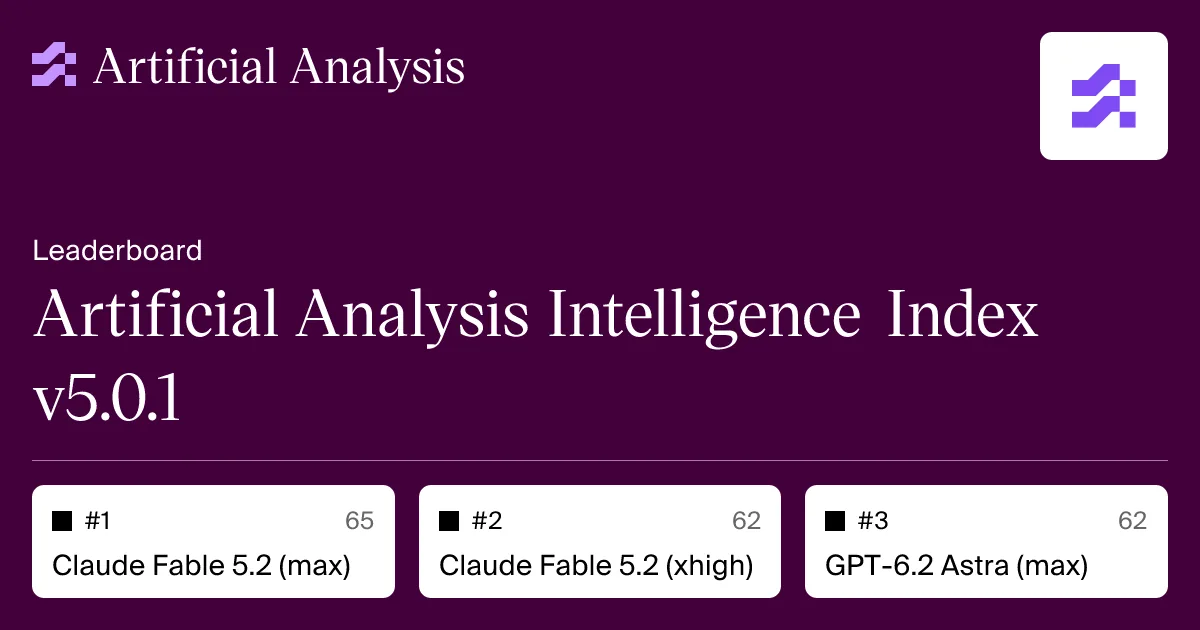
On independent third-party evaluations, DeepSeek and Qwen flagships sit within statistical margin of error overall while differentiating on speed, cost, and long-horizon tooling. According to VandaTeam’s November 24 comparison, DeepSeek-V4.1-Flash scores 159.4 (90% CI 157.1–161.9) on the 50-benchmark Epoch Capabilities Index versus 157.6 for Qwen3.8-Max (statistically tied). On Artificial Analysis Intelligence Index v5.0.1, DeepSeek V4.1-Flash (checkpoint 1017) reaches 33 at Max effort (29 High, up from 32 on initial v5 and 28 on V4), while Qwen3.8-Max holds 34 in our November 14 snapshot (32.7 Coding Index, 1,676±6 WebDev Arena).
Human preference ratings lean slightly toward Alibaba’s hosted flagship. On LMArena Text Arena, VandaTeam logs Qwen3.8-Max ahead at 1,485 Elo versus DeepSeek-V4.1-Flash at 1,463 Elo as of November 22, aligning closely with our November 18 snapshot placing Qwen3.8-Max at 1,486±4 Elo (39,457 votes) and open-weight Qwen3.8-27B at 1,437±4 Elo.
Task architecture and pricing also separate hosted usage. Analyses from Gate.AI and BenchLM note that Qwen3.8-Max and Qwen4-Max focus on deep multi-tool orchestration (with Qwen4-Max cutting Work360 task costs 62% from $4.43 to $1.67 and filtering cyber-offense training data), whereas DeepSeek V4.1-Flash supports up to 384K output tokens compared with Qwen3.8-Max’s 131K output ceiling (per Gate.AI) at list API rates of $0.03 input / $0.12 output ($0.01 cached) vs. Qwen3.8-Max ($2.00/$6.00) and Qwen4-Max ($1.50/$4.50 Singapore/OpenRouter, $0.075 cached).
Coding and local deployment: why Qwen wins 24GB GPUs and Macs
For developers running local workstations or single-GPU servers (such as a 24GB RTX 4090 or 32GB Mac Studio), Qwen is the practical default. DeepSeek’s V4 family targets multi-GPU datacenter nodes: its 284B to 552B Flash checkpoints and 1.6T Pro weights require cluster distribution or aggressive 2-bit/3-bit quantization with slow SSD offloading that degrades interactive editor latency—forcing single-machine Ollama users onto remote :cloud tags.
By contrast, Alibaba’s Apache-2.0 Qwen3.8-27B (~18 GB at Q4_K_M in Ollama, 30 GB at Q8) ships with native tool calling, toggleable thinking, and a 262,144-token window (extensible toward 1M), posting vendor-reported marks of 73.0 Terminal-Bench 2.1, 61.7% SWE-bench Pro, and 90.3 LiveCodeBench v6. On 32GB Macs, 18 GB weights leave generous headroom for long repository contexts; on tighter 24GB RTX 3090/4090 cards, pair OLLAMA_KV_CACHE_TYPE=q8_0 with an explicit OLLAMA_CONTEXT_LENGTH cap to prevent PCIe spillover.
Workstations scaling to 64GB+ also gain Alibaba’s Apache-2.0 Qwen3-Coder-30B-A3B and 80B MoE Qwen3-Coder-Next (~52 GB download) alongside Qwen Code, Cline, Aider, or OpenCode—earning top placement in our 24GB/32GB local coding picks and Qwen vs. Llama guide. When wiring Qwen3.8-27B into tight editor loops, keep per-request thinking mode toggleable: leave reasoning enabled for multi-file architectural planning while disabling thinking tokens on trivial inline patches to avoid hundreds of hidden latency tokens.
Over hosted APIs, however, Gradually AI’s comparison confirms that the 552B V4.1-Flash-1017 naturally outperforms the much smaller 27B dense model on complex multi-step reasoning—meaning local 27B checkpoints complement rather than replace cluster-scale endpoints on hard repository refactors.
Multimodal breadth: vision, image synthesis, speech, and embeddings
DeepSeek folded native image understanding directly into V4.1-Flash (retiring earlier separate experimental vision previews) and maintains a focused standalone tool API stack covering DeepSeek-OCR 2 ($0.225/1K pages), streaming ASR ($0.058/hr promo), TTS ($0.225/10K chars promo), server-side Search/Fetch ($0.75/1K), and an MIT-licensed chat-demo—covering screenshot debugging and document parsing cleanly inside one compact family.
Qwen operates a far wider standalone model suite across modalities. For visual creation and dense multi-column poster typography, Alibaba ships Qwen-Image-3.0 and transparent alpha-channel Qwen-Image-2.1; for real-time speech and streaming video agents, Qwen3.8-Omni-Flash and Qwen LiveTranslate handle synchronized audiovisual streams and speaker attribution; and speech suites include Qwen-Audio-3.1-TTS-Plus (#4 AA TTS Arena) and Fun-Realtime-ASR-preview (1.7% non-streaming WER).
For enterprise RAG pipelines, Alibaba’s Apache-2.0 Qwen3-Embedding (0.6B/4B/8B with 32K context) ranks near the top of MTEB text retrieval leaderboards. Teams wanting one vendor ecosystem spanning local text, vision, image generation, speech, and retrieval embeddings under consistent tokenization minimize integration friction with Qwen.
Licensing nuance: MIT open weights vs. Apache 2.0 and proprietary Max APIs
Both labs offer dramatically cleaner commercial paths for downloadable weights than custom MaaS-restricted peers, yet Sapling’s comparison highlights an essential legal split. DeepSeek publishes its downloadable V4, V4.1, V3.2, and R1 checkpoints uniformly under the permissive MIT License, placing minimal compliance overhead on internal deployments, derivative fine-tunes, or hosted third-party inference APIs.
Alibaba releases most mid-sized and specialized Qwen models (including Qwen3.8-27B, Qwen3-Coder, and Qwen3-Embedding) under Apache 2.0, which adds explicit patent grants and trademark boundaries favored by enterprise counsel (while experimental packages like Qwen3.8-Flash-Next ship under qwen-community-1.0). However, because Qwen3.8-Max and Qwen4-Max are proprietary hosted API SKUs—and Alibaba has confirmed smaller open-weight Qwen4 releases will follow without publishing a date—engineering leads must verify Hugging Face weight availability per exact model ID before promising air-gapped on-premises rollouts.
Remember also that Qwen4-Max applies cyber-offense data filtering at training time, whereas DeepSeek pairs its permissive MIT weights with optional server-side safety_check enforcement on hosted deepseek-flash API endpoints—letting self-hosted MIT deployments govern their own compliance boundaries internally.
Long-context serving economics and choosing the right stack
Although both flagship families advertise roughly 1 million tokens of context—1,000,000 on DeepSeek V4-Pro/V4.1-Flash and 991,808 to 1,000,000 across Qwen3.8-Max and Qwen4-Max configurations per LiteLLM—they optimize different operational bottlenecks. Alibaba addresses 1M-context memory bandwidth inside Qwen4-Max by pairing Gated DeltaNet and sparse attention layers with 71B active compute, keeping Work360 agent workflows efficient on managed APIs.
DeepSeek targets self-hosted serving economics instead: pairing asymmetric MoE footprints and 196B Engram lookup tables with its open-source DeepInfer inference engine and DualPath disaggregated cache-loading architecture to relieve storage and KV-cache I/O bottlenecks across multi-turn agent clusters on NVIDIA and Huawei accelerators.
Choose DeepSeek (V4.1-Flash / V4-Pro) when running high-volume agentic coding via API ($0.03/$0.12) or multi-GPU clusters, needing 384K single-turn output generation, or standardizing on MIT weights—or compare peers in our DeepSeek alternatives roundup. Choose Qwen when you need 16GB–32GB local models (Qwen3.8-27B), Apache 2.0 patent protection, MTEB embeddings, or Omni audiovisual tooling.
Many production engineering teams combine both strengths in a dual-tier router: sending sensitive local IDE edits, private file triage, and enterprise RAG indexing to self-hosted Qwen3.8-27B and Qwen3-Embedding, while bursting massive multi-file synthesis and long-context repository summaries to DeepSeek V4.1-Flash or Qwen4-Max via unified OpenAI-compatible gateways.
Sources: DeepSeek V4.1 Flash vs. Qwen3.8-Max Benchmark Comparison|VandaTeam ↗ DeepSeek V4.1 Flash vs. Qwen3.8-Max for AI Agents|Gate.AI ↗ DeepSeek V4.1 Flash vs. Qwen4-Max Comparison|BenchLM ↗ DeepSeek V4.1 Flash 1017 vs. Qwen3.8-27B|Gradually AI ↗ DeepSeek vs. Qwen Licensing & Ecosystem Overview|Sapling ↗ DeepSeek V4 Pro vs. Qwen3.8-Max Context & API Matrix|LiteLLM ↗
THE BROADER CONTEXT · DEEPSEEK DOSSIER
Explore full product specifications, pricing analysis, and continuous coverage in the DeepSeek Desk Hub and DeepSeek Models Dossier. Independent benchmarks available on the AI Intelligence Index and Coding Agents Leaderboard.