Best DeepSeek Alternatives: Open-Weight & API Models Tested
Matching enterprise data residency, MIT/Apache-2.0 open weights, higher frontier reasoning ceilings, and single-node local footprints across Mistral Large 4, Kimi K3.1 Pro, Qwen, GLM-5.3, Nanbeige4.3-33B, Claude 5.5, and Gemini 4.
THE STORY IN THREE POINTS
- DeepSeek V4.1-Flash-1017 sets an aggressive baseline—MIT weights, $0.03/$0.12 API pricing, and an Intelligence Index score of 33 in the November 19 Artificial Analysis snapshot—so teams leave primarily for data sovereignty, higher reasoning ceilings, enterprise SLAs, or smaller single-GPU checkpoints.
- Among open-weight peers, Moonshot Kimi K3.1 Pro scores 46 with 1M context and a custom $20M MaaS license, Z.ai GLM-5.3 Max scores 32, and Mistral Large 4 High scores 26 in the November 19 snapshot. Alibaba offers Apache-2.0 Qwen3.5 checkpoints for self-hosting.
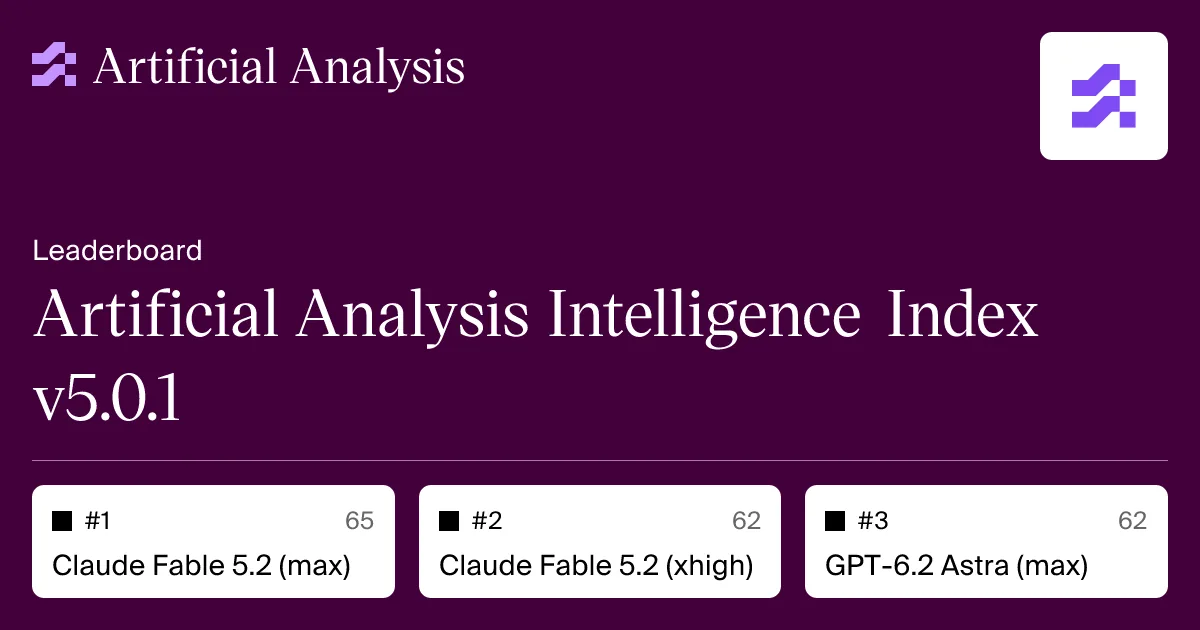
- For frontier SLA APIs, Claude Fable 5.2 Max scores 65, Gemini 4 Carbon High scores 60, and Gemini 4 Hydrogen Xhigh scores 54 in the November 19 snapshot; for lightweight Apache-2.0 local deployment, Nanbeige4.3-33B brings 512K context in 33.1B parameters.
Setting the DeepSeek V4.1 baseline—and four real reasons teams switch
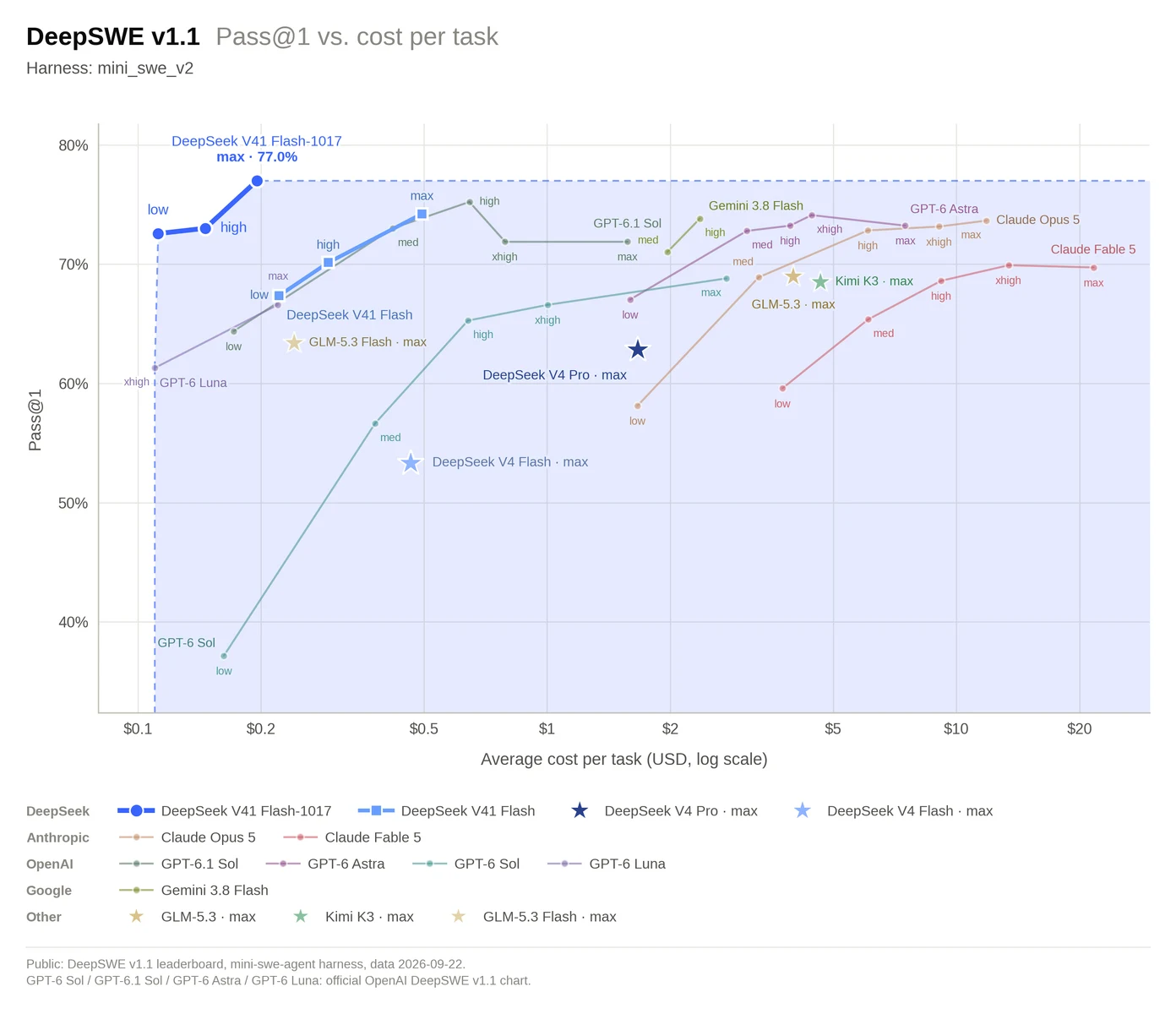
Generic "DeepSeek alternatives" lists that simply name consumer chatbots miss why engineering organizations actually evaluate replacements. As documented in our DeepSeek V4 vs V4.1 Flash and Pro guide, DeepSeek V4.1-Flash-1017 combines MIT-licensed open weights, $0.03 input / $0.12 output API token pricing, and a composite score of 33 for Max (No. 52) and 29 for High (No. 63) in the November 19 Artificial Analysis Intelligence Index v5.0.1 snapshot.
Teams therefore look beyond DeepSeek for four concrete engineering reasons rather than price alone: (1) strict US/EU corporate data-residency or procurement policies restricting direct DeepSeek API endpoints, (2) higher peak reasoning and coding reliability on complex multi-file repositories, (3) guaranteed cloud SLAs on AWS Bedrock, Google Vertex AI, or Azure, or (4) compact open weights that fit cleanly onto a single local GPU workstation without multi-node MoE infrastructure.
Open-weight alternatives: Kimi K3.1 Pro, Qwen, GLM-5.3, Mistral Large 4, and Nanbeige4.3-33B
Organizations prioritizing self-hosted open weights have distinct choices depending on license and geography, tracked closely in our Kimi, DeepSeek, and GLM open-weight comparison. For maximum open-weight reasoning and 1M-token document depth, Moonshot’s Kimi K3.1 Pro (2.8T total / 104B active MoE) scores 46 (No. 32 in the November 19 Intelligence Index snapshot). Its custom license requires a separate agreement above $20M in annual MaaS revenue. Alibaba pairs Qwen3.8 Max and Apache-2.0 Qwen3.5 MoE/dense checkpoints with closed-weight Qwen4-Max (1M multimodal context, $1.50/$4.50), while Z.ai GLM-5.3 scores 32 at Max (No. 53) with a permissive MIT license on GLM-5.3-Flash.
For European data sovereignty and Western enterprise compliance, Mistral Large 4 (released October 29 under the Mistral Ecosystem Open-Weight license, scoring 26 high-reasoning on AA Index v5) allows free commercial self-hosting outside Model-as-a-Service reselling. Meanwhile, developers needing a compact single-node local agent checkpoint without massive MoE RAM overhead should test Nanbeige4.3-33B—a 33.1B-parameter Apache-2.0 model engineered for coding and office agents with a 512K context window.
Managed enterprise APIs: Claude 5.5/Fable 5.2, Gemini 4, and GPT-6.1
When benchmark ceiling, enterprise indemnity, and multi-region cloud SLAs outweigh self-hosting, closed frontier APIs open a wide 20-to-32-point gap above open-weight averages on AI Intelligence v5.0.1 and our Coding Agents Leaderboard. In the November 19 Intelligence Index snapshot, Anthropic’s strongest configurations include Claude Fable 5.2 (65 at Max, No. 1, and 62 at High, No. 4), Claude Opus 5.5 (59 at Max, No. 10), and Claude Sonnet 5.5 (55 at Max, No. 19)—all deployable inside AWS Bedrock and Vertex AI with strict Zero Data Retention contracts.
Google DeepMind provides the strongest long-context enterprise alternatives across Gemini 4 Carbon (60 at High, No. 8 on the Intelligence Index), Gemini 4 Argon (50 at High, No. 27), and Gemini 4 Hydrogen (54 at Xhigh, No. 22, with 1M context at $1.50/$7.50). In the November 18 Text Arena snapshot, Carbon High ranked first at 1538±10 and Argon High ranked third at 1529±5. Rounding out the managed tier, OpenAI’s GPT-6.1 Sol and GPT-6.1 Terra (51 at Max, No. 25 on the Intelligence Index, with 1.05M context) give Azure and OpenAI enterprise teams high-throughput production tiers without leaving US/EU compliance zones.
Sources: Artificial Analysis Intelligence Index v5.0.1 Leaderboard|Artificial Analysis ↗ Text Arena Leaderboard|Arena ↗ Mistral Large 4 Open-Weight Release & License|Mistral AI ↗ Moonshot Kimi K3.1 Pro Open Weights & Model Card|Hugging Face ↗ Qwen4-Max General Availability & Qwen Model Lineup|Alibaba Qwen ↗ Nanbeige4.3-33B Open Weights (Apache 2.0, 512K Context)|Hugging Face ↗ DeepSeek Alternatives Comparison & Enterprise Guide|AIComparison ↗
THE BROADER CONTEXT · DEEPSEEK DOSSIER
Explore full product specifications, pricing analysis, and continuous coverage in the DeepSeek Desk Hub and DeepSeek Models Dossier. Independent benchmarks available on the AI Intelligence Index and Coding Agents Leaderboard.