A2A vs MCP: How Agent2Agent and Model Context Work
Google’s Agent2Agent (A2A) protocol does not replace Anthropic’s Model Context Protocol (MCP): MCP wires a single agent vertically to tools and data, while A2A connects independent agents horizontally via Agent Cards and managed task lifecycles.
THE STORY IN THREE POINTS
- Core boundary: MCP provides vertical integration (one agent calling deterministic external tools, databases, and files), whereas A2A provides horizontal peer-to-peer coordination (independent agents delegating asynchronous, multi-turn tasks across frameworks).
- Both protocols now sit under the Linux Foundation’s Agentic AI Foundation and use complementary primitives: A2A publishes capability manifests at /.well-known/agent-card.json over JSON-RPC 2.0/HTTP(S) and SSE with stateful Task Lifecycles and Artifacts, while preserving agent opacity.
- Production enterprise stacks pair both layers together—using A2A to route tickets between autonomous domain agents across vendor clouds while each specialist agent invokes internal APIs and SQL warehouses locally through MCP.
Vertical tool access (MCP) vs horizontal agent collaboration (A2A)
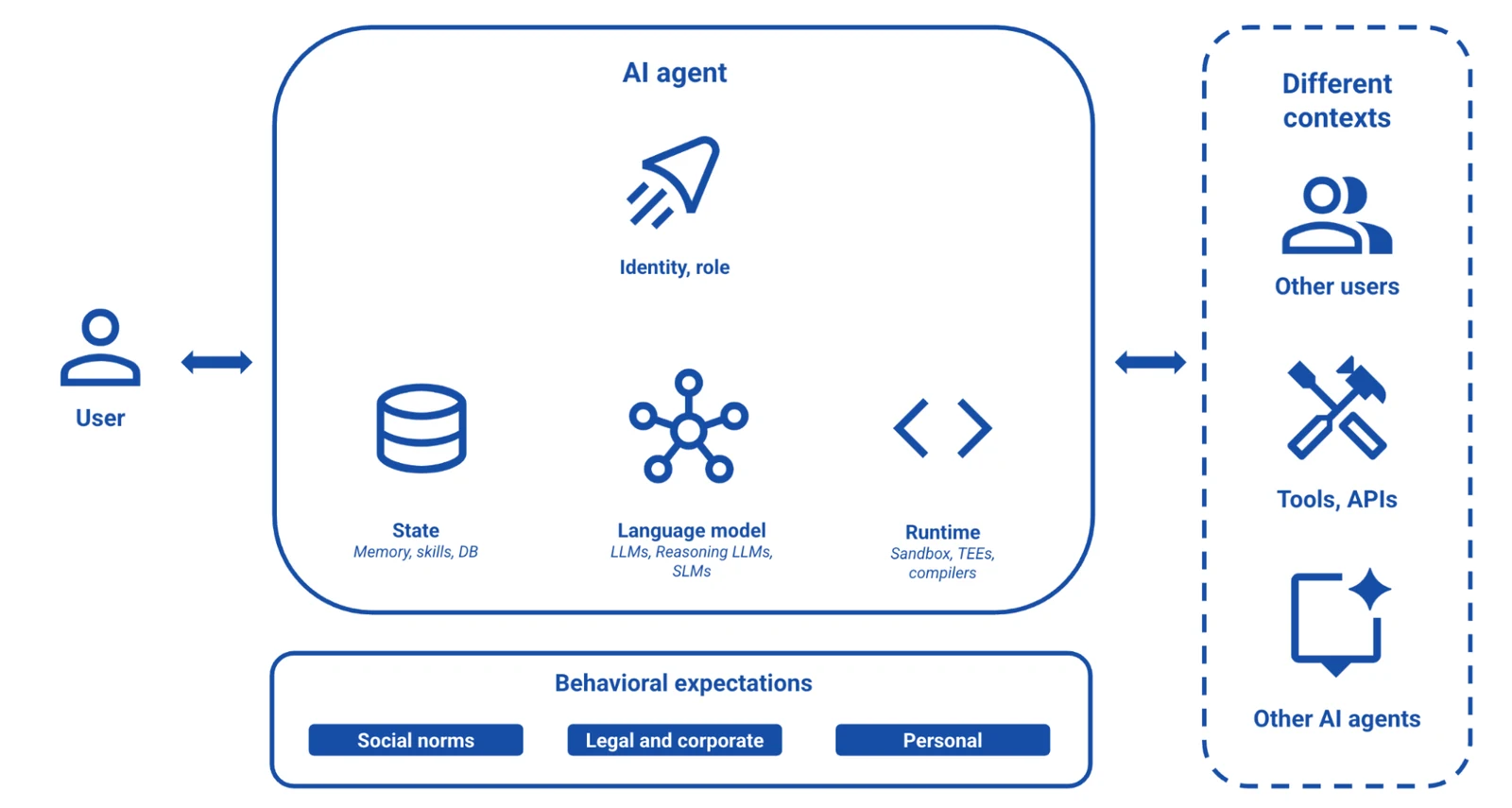
A persistent misconception in enterprise architecture reviews is that Google’s Agent2Agent (A2A) protocol competes to replace Anthropic’s Model Context Protocol (MCP). As the official A2A specification and Redis’s protocol architecture guide emphasize, the two standards solve orthogonal layers—both stewarded under the Linux Foundation’s Agentic AI Foundation. MCP operates vertically: it gives a single AI model structured, deterministic access to external tools, files, prompts, and databases, as covered in our MCP architecture guide and Claude Code MCP setup walkthrough.
A2A operates horizontally across organizational and framework boundaries. Rather than turning another autonomous agent into a brittle stateless function call, A2A lets an agent built in LangGraph, CrewAI, Google ADK, or Semantic Kernel discover a peer agent, delegate an open-ended goal, negotiate input clarification, and collect finished Artifacts—all while preserving strict opacity so neither agent has to expose its internal system prompts, proprietary reasoning traces, or private tool credentials.
Agent Cards, Task Lifecycles, transport bindings, and auth models compared
Comparing the four wire-level primitives clarifies when each standard applies. For discovery, MCP clients query a server’s declared tools, resources, and prompts over stdio or streamable HTTP; A2A servers publish a standardized JSON Agent Card at /.well-known/agent-card.json listing the agent’s endpoint, streaming/push notification support, security schemes, and natural-language Agent Skills. For execution state, MCP tool calls are generally short-lived request/response invocations, whereas A2A centers on a stateful Task Lifecycle (submitted, working, input-required, completed, failed) streamed over JSON-RPC 2.0 on HTTP(S) with Server-Sent Events (SSE) and asynchronous push webhooks for tasks spanning minutes or hours.
Authentication and browser boundaries follow the same layered split. MCP commonly pairs local process isolation or OAuth bearer headers with scoped tool permissions (and complements tab-scoped client tools in Chrome’s WebMCP origin trial plus Google’s A2UI 1.0 generative interface standard), whereas A2A adopts standard enterprise HTTP auth schemes—OAuth 2.0, OIDC, API keys, and mutual TLS—declared directly inside each Agent Card so cross-company agents can authenticate without sharing internal database credentials.
How enterprises combine A2A routing with MCP tool execution
Consider an enterprise operations workflow linking Google’s Gemini enterprise agents with third-party workplace systems such as Atlassian Rovo. When an employee reports a delayed hardware shipment, a front-desk orchestrator agent reads the /.well-known/agent-card.json manifests of internal Procurement and Logistics agents and opens an A2A Task with the Logistics specialist.
Inside its own security boundary, the Logistics agent never exposes warehouse SQL credentials upstream; instead, it uses MCP servers internally to query ERP tables, fetch carrier API statuses, and inspect PDF packing slips, then streams status events and a signed shipping resolution Artifact back to the orchestrator over A2A. Using MCP for tools and A2A for autonomous peers prevents brittle god-agents while keeping audit boundaries intact.
Sources: A2A and MCP: Complementary Agent Protocols|A2A Protocol Official Docs ↗ Agent2Agent (A2A) Protocol Specification & Agent Cards|a2a-protocol.org ↗ Model Context Protocol (MCP) Official Specification|modelcontextprotocol.io ↗ MCP vs A2A: Which Protocol Do You Need?|Redis Engineering Blog ↗
THE BROADER CONTEXT · GOOGLE DOSSIER
Explore full product specifications, pricing analysis, and continuous coverage in the Google Desk Hub. Independent benchmarks available on the AI Intelligence Index and Coding Agents Leaderboard.