What Is WebMCP? How Chrome Turns Websites Into Agent Tools
Co-incubated by Google and Microsoft in the W3C Web Machine Learning Community Group and testing in a Chrome 149 origin trial, WebMCP replaces fragile DOM scraping and click simulation with page-declared JavaScript tools.
THE STORY IN THREE POINTS
- WebMCP (W3C Web Machine Learning Draft Community Group Report, October 2026; Chrome 149 Origin Trial and chrome://flags/#enable-webmcp-testing) lets webpages declare typed tool schemas cleanly rather than forcing browser agents to scrape DOM pixels or simulate mouse clicks.
- Unlike backend MCP servers using persistent JSON-RPC over HTTP or stdio, WebMCP exposes transient client-side tools (via document.modelContext.registerTool() or declarative HTML form annotations) scoped strictly to the open browser tab and signed-in session.
- Security controls rely on untrusted hint annotations (readOnlyHint, consequentialHint, untrustedContentHint), cross-origin exposedTo/fromOrigins grants, and Permissions-Policy: tools=() headers—while Mozilla remains neutral and WebKit currently opposes.
What is WebMCP and why Chrome 149 introduced structured page tools
For developers asking what is WebMCP, the short technical answer is a proposed browser interface co-developed by engineers from Google and Microsoft inside the W3C Web Machine Learning Community Group (Draft Report updated October 20, 2026). Opened in early preview on February 10, 2026, documented on Chrome for Developers on May 18, 2026, and running as an Origin Trial from Chrome 149 (testable locally via chrome://flags/#enable-webmcp-testing alongside a dedicated Application pane panel in Chrome DevTools), WebMCP lets any web application expose named, schema-validated functions—such as filter_results or checkout—directly to an in-browser AI agent.
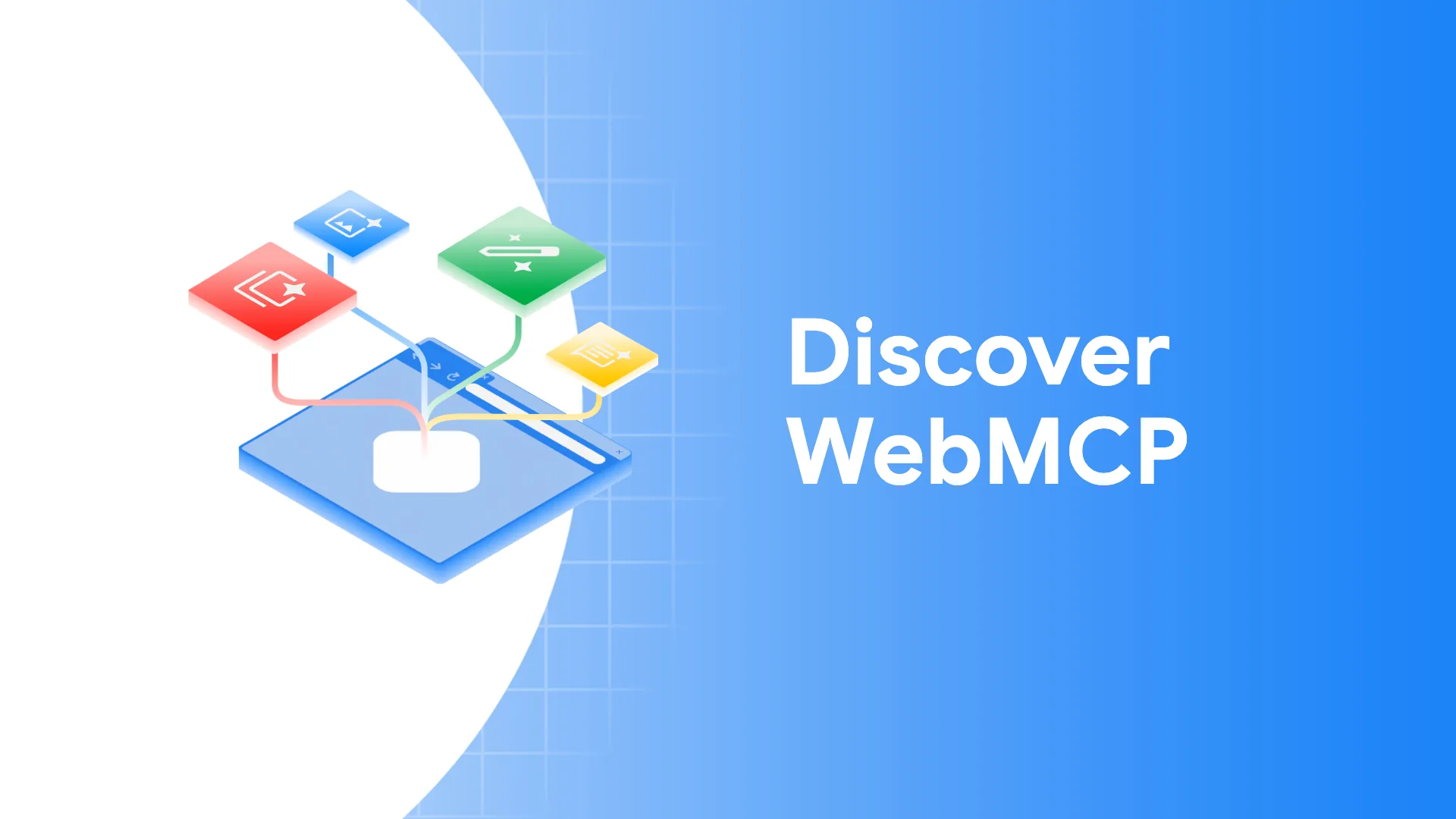
Traditional browser agents rely on brittle "actuation"—taking viewport screenshots or inspecting mutable CSS selectors to guess which button submits an order, a workflow we examined in Google Antigravity’s autonomous browser verification coverage. WebMCP replaces pixel guessing with explicit tool contracts: websites publish an Imperative JavaScript handler via document.modelContext.registerTool() (updated from early navigator.modelContext drafts) containing a name, natural-language description, JSON inputSchema, and execute callback, or annotate standard HTML form elements declaratively so agents trigger deterministic page logic visibly inside the user’s live tab.
WebMCP vs MCP: client-side browser tabs vs persistent backend servers
Although WebMCP borrows Model Context Protocol terminology—tools, schemas, and structured arguments—Google’s documentation and Safeguard’s specification analysis emphasize that WebMCP vs MCP are architecturally distinct layers rather than identical protocols running inside Chrome. Standard backend MCP spins up continuous daemon processes speaking JSON-RPC over stdio or remote HTTP, exposing Resources, Prompts, and Tools across repositories or APIs even when no browser window is open.
By contrast, WebMCP contains no external server process, no JSON-RPC wire transport, and no Resources or Prompts primitives. Tools registered under WebMCP exist strictly inside the active document DOM and vanish the instant a user closes or navigates away from the tab. That ephemeral lifecycle brings one dramatic UX advantage alongside Google’s A2UI 1.0 interface protocol: because tool calls run inside the browser’s authenticated page context, the user remains signed in with existing cookies, MFA state, and visible on-screen confirmation rather than delegating standalone OAuth credentials to headless cloud bots.
Permissions-Policy locking, safety annotations, and split vendor adoption
Executing script callbacks directly inside a user’s authenticated origin sharpens client-side security risk. Because prompt injection hidden inside user-generated comments or third-party scripts could coax an agent into misusing exposed page actions, WebMCP’s specification defines three explicit safety metadata fields: readOnlyHint, consequentialHint (signaling irreversible checkout, delete, or message-send tools requiring explicit human confirmation), and untrustedContentHint. However, as Safeguard’s October 24 audit warns, annotations remain advisory hints that malicious sites can omit or spoof—meaning agents must never blindly trust unverified hints, cross-origin callers must match both exposedTo and fromOrigins policies, and handlers must still enforce server-side authorization inside every execute callback.
Site owners who do not intend to expose WebMCP endpoints on sensitive portals (such as banking dashboards or admin panels) can block registration pre-emptively by sending the HTTP header Permissions-Policy: tools=(), overriding the default ’self’ origin allowlist across nested iframes before page scripts initialize. Meanwhile, engineering leaders planning roadmaps should build WebMCP strictly as a progressive enhancement over normal accessible HTML forms: Chrome leads implementation via the Chrome 149 origin trial, but standards positions elsewhere remain split, with Mozilla labeled neutral and Apple’s WebKit formally opposed as of late October 2026.
Sources: WebMCP Documentation — AI in Chrome (Origin Trial & DevTools)|Chrome for Developers ↗ WebMCP Explained: Website Tools for Browser Agents and How to Secure Them|Safeguard Blog ↗ What Is WebMCP? Making Your Website Agent-Ready in 2026|Flowtivity ↗
THE BROADER CONTEXT · GOOGLE DOSSIER
Explore full product specifications, pricing analysis, and continuous coverage in the Google Desk Hub. Independent benchmarks available on the AI Intelligence Index and Coding Agents Leaderboard.