Google Antigravity Built-In Browser Adds Autonomous Agent Control for App Verification and Research
Google DeepMind’s Varun Mohan highlights autonomous browser actuation in Antigravity, allowing agents to directly drive a built-in browser for knowledge work, live web app testing, and CLI-free research.
THE STORY IN THREE POINTS
- Varun Mohan (@_mohansolo) announced that agents in Google Antigravity can now autonomously operate the platform’s built-in browser.
- Per Google’s official docs, the built-in browser agent (Antigravity App v2.30.0+) supports macOS, Windows, and Linux for personal Free, Plus, AI Pro, and AI Ultra accounts, excluding Enterprise accounts, Remote Agents, and SSH windows.
- Enterprise accounts, Antigravity CLI, and Antigravity IDE v2.6.0+ / VS Code extension v1.9.0+ route /browser commands through the Chrome DevTools browser subagent instead.
Direct built-in browser operation for coding and knowledge agents
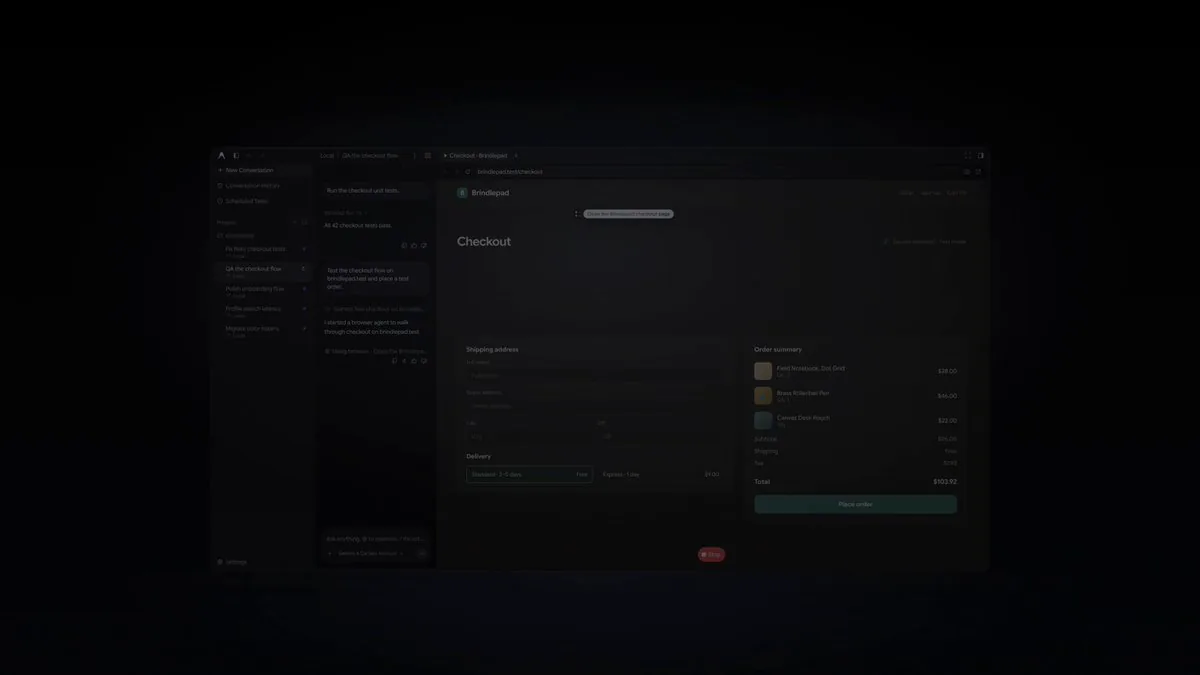
On November 12, 2026, Varun Mohan (@_mohansolo), Director of Engineering at Google DeepMind, shared a new milestone for Google Antigravity: autonomous agents can now directly operate Antigravity’s built-in web browser. Rather than confining coding and research agents to terminal shell commands and static file reads, Antigravity gives agents a native visual browser environment they can navigate, click, fill forms in, and inspect autonomously.
Mohan noted that the built-in browser capability is designed to bridge software engineering and general knowledge work, teasing that additional Antigravity platform updates will follow later this week.
Closing the verification loop: Live UI testing and CLI-free research
In full-stack software development, a persistent gap for terminal-only coding agents is verifying visual frontend behavior after code compiles. With Antigravity’s built-in browser, an agent can start a local development server, open the live localhost application in the integrated browser, interact with UI components, inspect visual state, and validate multi-step user flows without manual developer intervention.
Beyond application testing, the browser agent unlocks dynamic research and operational workflows across web services that lack an existing command-line interface (CLI) or REST API—allowing agents to gather live documentation, inspect client-rendered dashboards, and synthesize findings directly back into the workspace.
How Antigravity fits into the 2026 browser agent landscape
Antigravity’s integrated browser architecture joins a rapidly maturing ecosystem of browser-enabled coding environments. Google’s official Browser Use documentation separates surface availability cleanly: the zero-setup built-in browser agent requires Antigravity App v2.30.0+ on a personal Google Account (Free, Plus, Google AI Pro, or Google AI Ultra across macOS, Windows, and Linux) and is not yet enabled for business or enterprise accounts, Remote Agents, or SSH workspace windows (though manual side-panel browsing rolled out across all accounts in v2.26.0+).
Teams on enterprise accounts, Antigravity CLI, local Antigravity IDE (v2.6.0+), or the Antigravity VS Code extension (v1.9.0+) use the /browser command via the Chrome DevTools browser subagent. Developers comparing session isolation can also review OpenCode Browse’s explicit tab-sharing permissions, the Antigravity CLI migration guide, and browser agents, logged-in sessions, and 2FA handoffs.
Sources: Browser Use Documentation|Google Antigravity ↗ Antigravity Built-In Browser Agent Announcement|Varun Mohan (@_mohansolo) on X ↗ Google DeepMind Developer & Research Portal|Google DeepMind ↗
THE BROADER CONTEXT · GOOGLE DOSSIER
Explore full product specifications, pricing analysis, and continuous coverage in the Google Desk Hub. Independent benchmarks available on the AI Intelligence Index and Coding Agents Leaderboard.