DeepSeek V4.1 Flash Review: Benchmarks, Harness & Size
DeepSeek V4.1 Flash (1017) review: 552B MoE asymmetric CED + 196B Engram specs, MIT license, why agent harnesses swing DeepSWE scores by 8.6 points, AA v5 (32) vs v5.0.1 (33) standings, and V4-Pro continuity.
THE STORY IN THREE POINTS
- Asymmetric footprint and KV savings: DeepSeek V4.1-Flash (Sept 10, updated Oct 17 to 1017) uses a 552B MoE Causal Encoder-Decoder (~8B prefill / ~16B decode active) plus 196B Engram conditional memory, cutting KV cache to 1/4 HBM and 1/8 SSD vs. prior generation—while retaining V4-Pro service after changelog revisions.
- Independent score reality: DeepSeek V4.1 Flash 1017 (Max) scored 32 on AA Intelligence Index v5 (Oct 27) and 33 on v5.0.1 ($0.60/task; High 29 at $0.46), trailing Kimi K3.1 Pro (46), Claude Haiku 5.5 Max (36), and Opus 5.5 Max (59), and passing 36/43 (84%) on Plotly’s analytics exam.
- The 8.6-point harness spread: DeepSWE v1.1 drops from 74.2% in mini-SWE to 69.8% in Claude Code and 65.6% in Codex (and Terminal-Bench 2.1 drops from 90.6% to 84.1%), making explicit failing test assertions inside prompts critical in third-party CLI tools.
Architecture, 552B asymmetric footprint, and V4-Pro continuity
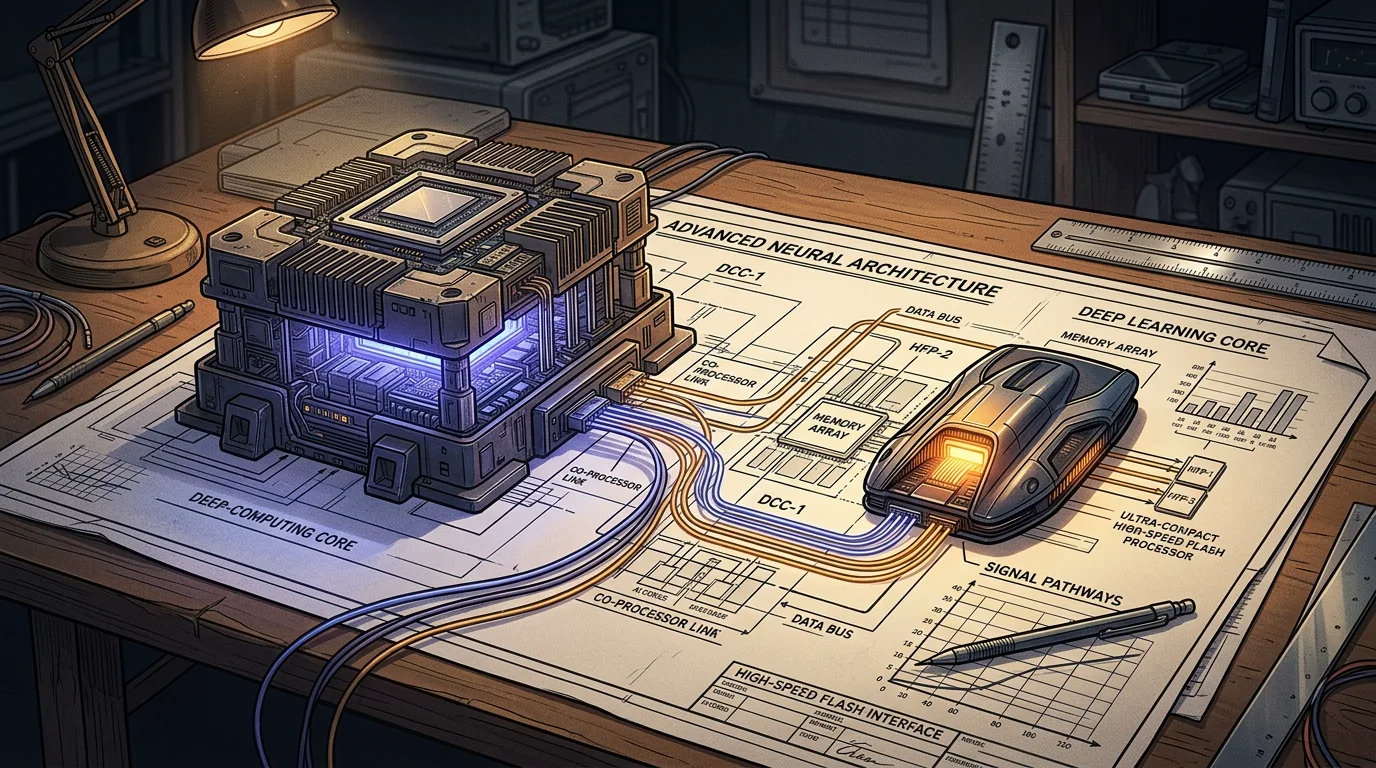
Launched on September 10, 2026 (covered in our launch analysis) and refreshed to DeepSeek-V4.1-Flash-1017 on October 17 (1017 changelog coverage), DeepSeek V4.1 Flash is a 552-billion-parameter Mixture-of-Experts (MoE) open-weight model featuring native image understanding, a 1-million-token input context window, up to 384K output tokens, and a permissive MIT license. Rather than activating uniform weights across turns, V4.1-Flash introduces a Causal Encoder-Decoder (CED) design activating ~8B parameters per token during prefill and ~16B during decode alongside 196B Engram conditional memory lookup—slashing KV cache footprint to 1/4 the HBM and 1/8 the SSD storage of prior DeepSeek generations.
Clarifying endpoint status is critical for teams migrating legacy integrations: on September 10, DeepSeek permanently retired V4-Flash and V4-Flash-Vision-Exp (aliasing legacy identifiers onto deepseek-flash). While DeepSeek’s launch blog initially announced plans to route deepseek-v4-pro traffic onto V4.1-Flash starting September 14—a point emphasized in Flowtivity’s analysis—DeepSeek subsequently updated its API changelog to preserve direct V4-Pro service continuity alongside V4.1-Flash.
DeepSeek’s launch measurements quantify why that Causal Encoder-Decoder plus Engram memory design matters at high context lengths: global KV cache allocation shrinks to just 890 bytes per token, down from 3,514 bytes/token on V4-Flash, 48,068 bytes/token on DeepSeek-V3.2, and 389,120 bytes/token on DeepSeek-V1—expanding concurrent multi-file repository sessions per GPU node.
Vendor agentic claims vs. Artificial Analysis and Plotly results
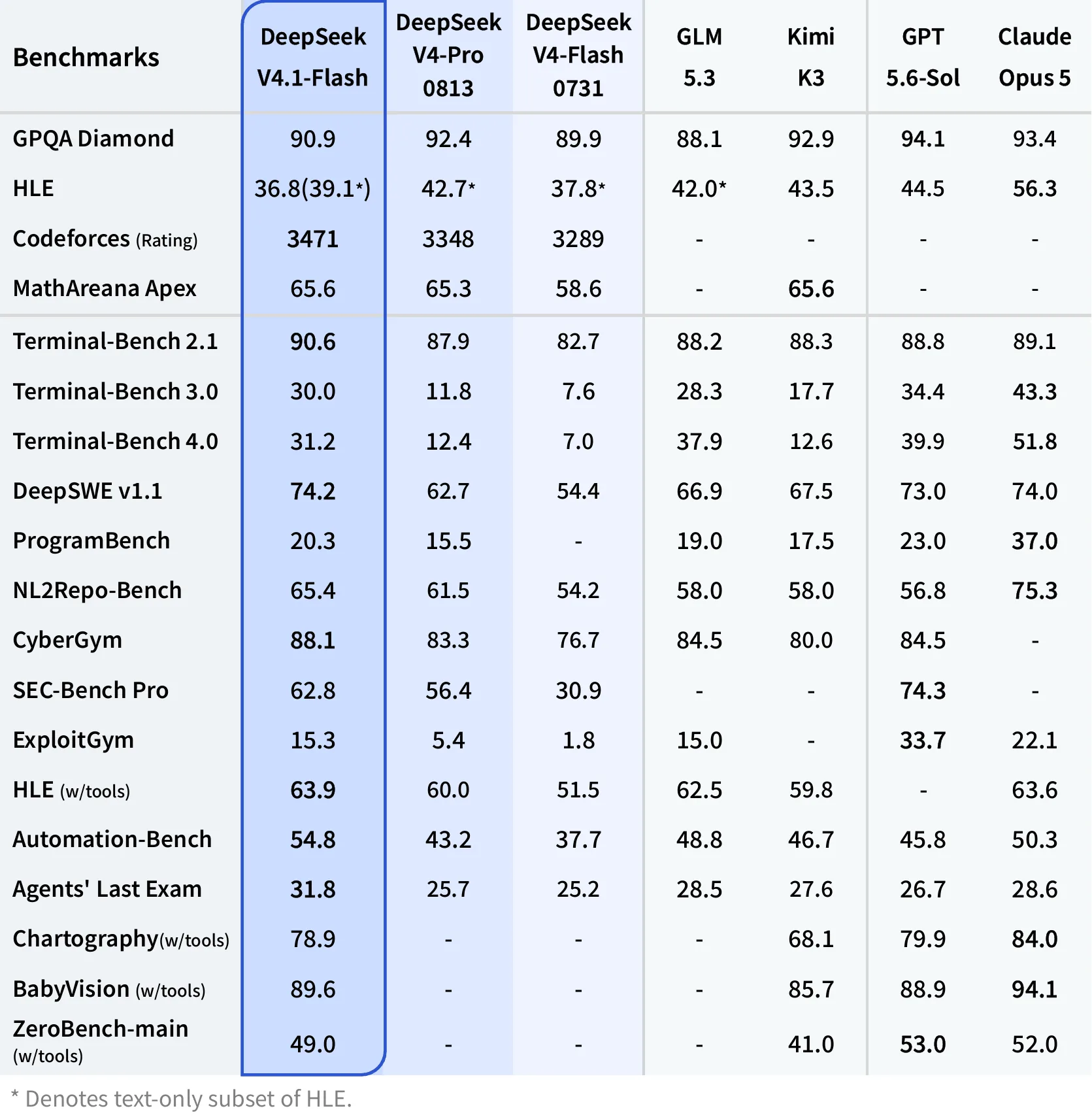
In DeepSeek’s model card, V4.1-Flash posts impressive figures against earlier closed models such as GPT-5.6 Sol and Claude Opus 5.0: 74.2% on DeepSWE v1.1, 54.8% on AutomationBench, 31.8% on Agents’ Last Exam, 90.6% on Terminal-Bench 2.1, and 88.1% on CyberGym (Flowtivity). The October 1017 post-training release trimmed chain-of-thought verbosity and improved multi-step tool reliability without bumping the deepseek-flash API slug.
Additional DeepSeek release-table figures span competitive coding, science, vision, and security engineering: 3,471 on Codeforces, 90.9% on GPQA Diamond, 65.4% on NL2Repo-Bench, 62.8% on SEC-Bench Pro, 89.6% on BabyVision, and 65.6% on MathArena Apex. However, Morph flagged that DeepSeek omitted the widely standardized SWE-bench suite in favor of DeepSWE v1.1, making cross-vendor third-party runs essential.
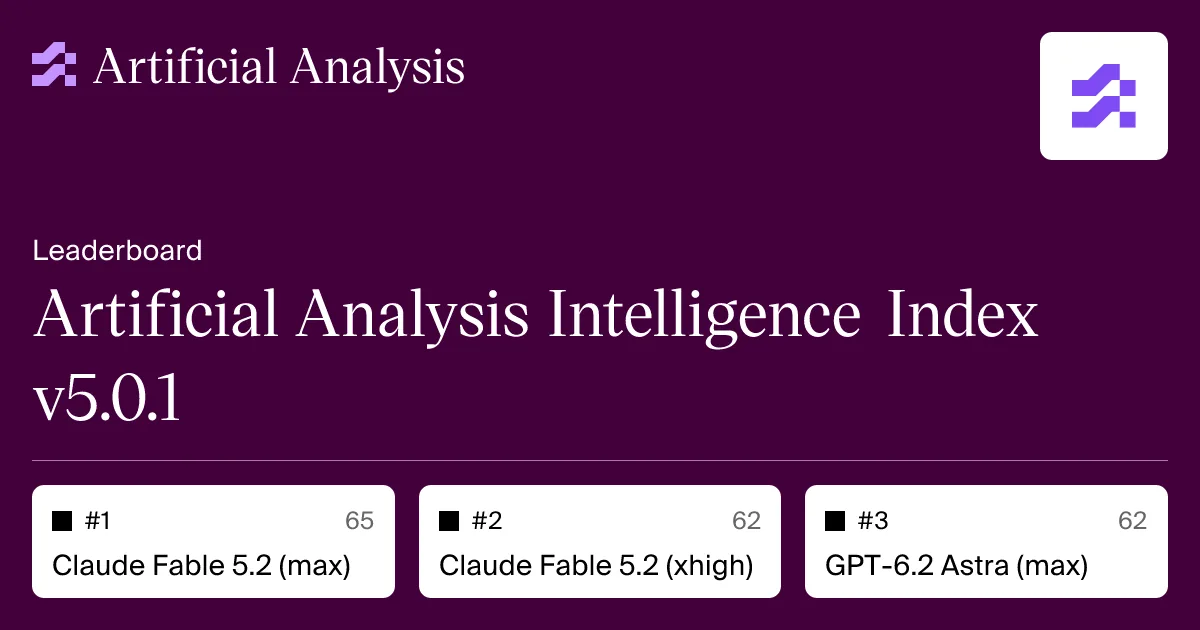
Independent cross-lab testing paints a clearer competitive picture against late-2026 peers. On Artificial Analysis Intelligence Index (Morph), DeepSeek V4.1 Flash 1017 (Max) scored 32 on the October 27 v5 release—tying GLM-5.3 at the time—and moved to 33 ($0.60/task; 29 High at $0.46/task) on our November 19 v5.0.1 snapshot (v5.0.1 audit), still trailing Kimi K3.1 Pro (46), Claude Haiku 5.5 Max (36), and Claude Opus 5.5 Max (59). Similarly, on Plotly’s 43-question data-analytics benchmark, V4.1 Flash scored 36/43 (84%) at just $0.46 per run (~1/29th Opus 5.5’s $13.31 cost for 41/43), trailing GPT-6 Luna (38/43) and Haiku 5.5 (37/43), though domain fine-tuning (Particle-1) lifted accuracy to 40/43.
The hidden variable: why agent harnesses swing pass rates by 8.6 points
One of the most instructive disclosures in DeepSeek’s evaluation table—spotlighted by Morph—is how sharply DeepSeek V4.1 Flash scores diverge across different coding scaffolds using identical weights. On DeepSWE v1.1, V4.1 Flash reaches 74.2% inside mini-SWE, drops to 69.8% inside Claude Code, and slides further to 65.6% inside the Codex harness.
Terminal-Bench 2.1 shows a parallel gap, moving from 90.6% under DeepSeek’s Minimal scaffold down to 84.1% inside Codex (alongside 36.8 on the AA Coding Agents Index at $0.32/task). That 8.6-percentage-point DeepSWE swing explains why engineers routing deepseek-flash inside third-party IDE or CLI agents often observe lower patch completion than headline tables suggest unless prompts are tuned specifically for its tool-calling style.
Morph’s comparative analysis observed analogous scaffold sensitivity on peer open-weight model GLM-5.3, underscoring that diff-edit formatting, retry policies, and bash feedback loops shift pass rates almost as dramatically as base weights. Economically, V4.1-Flash remains compelling even inside suboptimal harnesses: its $0.60/task on Artificial Analysis Intelligence Index v5.0.1 and $0.32/task on the AA Coding Agents Index undercut Gemini 4 Argon’s $4.97/task and $6.84/task v5.0.1 profiles by roughly an order of magnitude.
Hands-on coding behavior: why failing tests change everything
Empirical repository testing reinforces why prompt framing dominates real-world patch success. In MangoMind’s October 30 evaluation, V4.1 Flash struggled slightly more on open-ended, unguided multi-file changes than heavyweight closed models, yet delivered a dramatic jump in first-pass accuracy whenever prompts supplied test-driven grounding—specifically pasting the failing unit test, compiler line, or exact error assertion directly into the task.
The October 1017 upgrade also cured runaway reasoning loops reported during the short-lived September beta (deepseek-v4.1-flash-expires-on-0910), producing tighter reasoning chains and faster turnaround while keeping DeepSeek’s $0.03 input / $0.12 output ($0.01 cached) API rates intact (note DeepSeek also previously offered peak/off-peak schedules on earlier v4 transitions).
Self-hosting reality: 552B cluster requirements vs. hosted OpenAI API
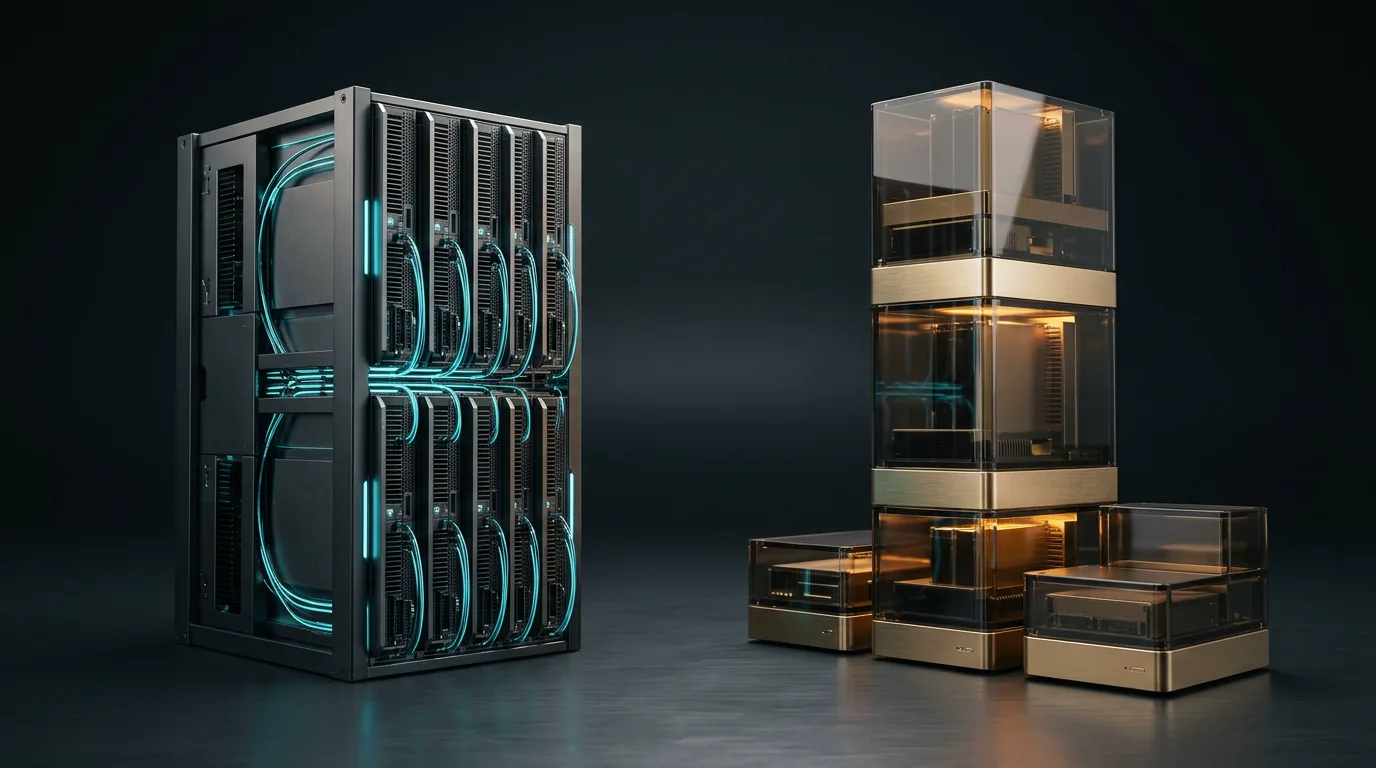
At 552B total parameters, V4.1 Flash is built for multi-GPU enterprise nodes rather than single-workstation developers. Pulling heavily quantized variants with SSD offloading onto a 24GB GPU results in sluggish interactive turnaround compared with compact Apache-2.0 options like Qwen3.8-27B or Qwen3-Coder-30B-A3B—compare both ecosystems side by side in our DeepSeek vs. Qwen comparison.
For infrastructure teams operating multi-GPU clusters, pairing V4.1 Flash’s MIT weights with DeepSeek’s DeepInfer inference framework and DualPath KV-cache storage offloading unlocks high-concurrency 1M-context throughput. Teams without GPU clusters can wire the standard OpenAI-compatible deepseek-flash endpoint directly into Cursor BYOK, Cline, OpenCode, or LiteLLM (MangoMind), capturing automatic prefix cache hits across repeated repository instructions.
Keep that hardware math clear when planning self-hosted deployments: even though the Causal Encoder-Decoder routes only ~16B parameters per decoded token, serving all 552B total MoE experts still demands multi-GPU VRAM pools to avoid severe PCIe or NVMe bottlenecks. Unless your organization already operates dedicated multi-node clusters, paying DeepSeek’s hosted $0.03 input / $0.01 cached / $0.12 output rates delivers predictable latency without hardware maintenance.
Verdict: when to pick DeepSeek V4.1 Flash vs. Opus 5.5 or Kimi K3.1 Pro
Choose DeepSeek V4.1 Flash (1017) for high-throughput automated CI reviews, test-driven bug fixing (always attach the failing test assertion), batch document extraction, and MIT-licensed deployments needing 1M context, 384K output capacity, and industry-leading $0.03/$0.12 token economics.
Choose Claude Opus 5.5 or Kimi K3.1 Pro (46 AA Index) when ambiguous architectural planning on unguided repositories outweighs prefill throughput, massive single-turn output budgets, or permissive MIT self-hosting requirements.
In production engineering stacks, V4.1 Flash (1017) consistently earns the highest return inside two-tier routing: let deepseek-flash handle automated PR review, repository indexing, and test-anchored fixes at pennies per run, while escalating only genuinely ambiguous cross-service refactors to higher-cost reasoning flagships.
Sources: Introducing DeepSeek-V4.1-Flash|DeepSeek News ↗ DeepSeek-V4.1-Flash-1017 Release Notes|DeepSeek API Docs ↗ DeepSeek V4.1 Flash 1017 Evaluation|Artificial Analysis ↗ DeepSeek V4.1 Flash Benchmarks & Harness Spread|Morph ↗ DeepSeek V4.1 Flash Benchmarks Breakdown|Flowtivity ↗ DeepSeek V4.1 Flash Data Analytics Benchmark|Plotly ↗ DeepSeek V4.1 Flash Hands-On Coding Review|MangoMind ↗
THE BROADER CONTEXT · DEEPSEEK DOSSIER
Explore full product specifications, pricing analysis, and continuous coverage in the DeepSeek Desk Hub and DeepSeek Models Dossier. Independent benchmarks available on the AI Intelligence Index and Coding Agents Leaderboard.