OpenAI Launches Daybreak Defense Factory & Red Team at Cyber at the Frontier
OpenAI expands governed cyber operations into two turnkey agentic AppSec suites built atop Codex Security, integrating Sonar and Semgrep into automated find-validate-patch loops.
THE STORY IN THREE POINTS
- At its November 12 "Cyber at the Frontier" event, OpenAI expanded Daybreak into two turnkey enterprise products: Daybreak Defense Factory for continuous remediation and Daybreak Red Team for authorized agentic pentesting.
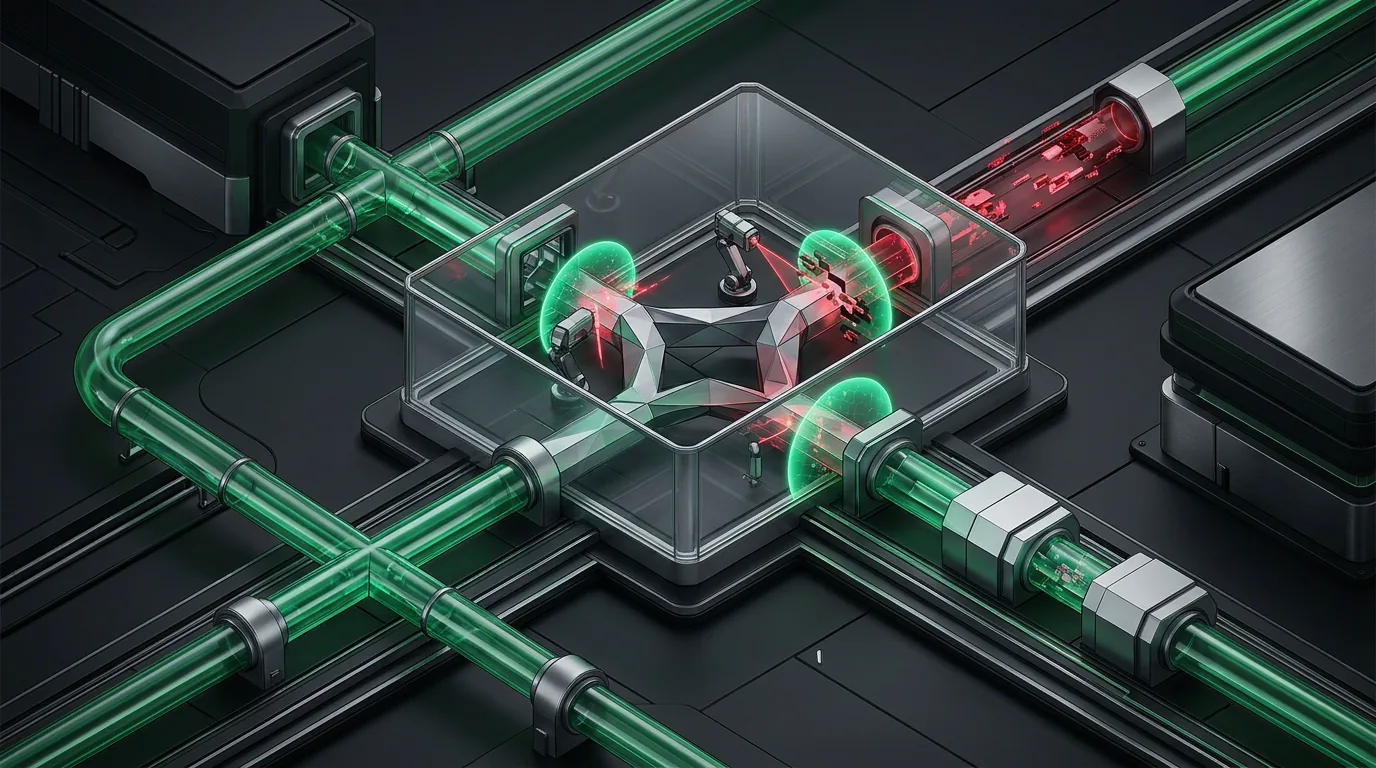
- Daybreak Defense Factory layers atop Codex Security Cloud and CLI to watch code changes, deduplicate scanner alerts, validate exploitability inside sandboxes, and stage tested, merge-ready patches for engineers.
- Over 35 Daybreak Defense Network partners—including Sonar (SonarQube quality-gate checks) and Semgrep—connect existing SAST, SCA, and secrets pipelines into automated remediation.
From gated GPT Cyber models to turnkey AppSec workflows
During OpenAI’s November 12, 2026 "Cyber at the Frontier" keynote hosted by President Greg Brockman and Head of Cyber Johannes Landgraf, the company moved its Daybreak cybersecurity initiative beyond raw model access tiers (Daybreak Blue for defensive frontier coding and Daybreak Red for governed cyber evaluations) into packaged enterprise tooling. Specifically, OpenAI introduced Daybreak Defense Factory and Daybreak Red Team to compress the gap between vulnerability discovery and verified code remediation.
Rather than asking AppSec engineers to manually craft prompts against specialized checkpoints, both suites run coordinated multi-agent pipelines inside isolated, reproducible sandboxes. When paired with Codex enterprise rollouts, engineering leaders can embed frontier cyber defense directly into pull-request reviews without lowering guardrails across consumer surfaces.
How Defense Factory and Red Team close the validation loop
Daybreak Defense Factory operates continuously atop Codex Security Cloud and Codex CLI: as pull requests open or external scanners fire alerts, autonomous agents inspect surrounding repository context, filter out unexploitable noise, reproduce candidate flaws in sandboxed runtimes, and open tested, merge-ready patches for human sign-off. The objective is shrinking mean time to remediate (MTTR) while cutting false-positive triage backlogs.
Complementing remediation, Daybreak Red Team orchestrates hierarchical coordinator, investigator, and reviewer agents that actively map web-application attack paths and verify whether theoretical code bugs actually yield working exploits. Confirmed paths feed directly back into Defense Factory patch loops alongside OpenAI’s $1 billion Daybreak for Frontline Defenders program supporting critical infrastructure, municipal systems, and open-source maintainers.
Sonar, Semgrep and the 35-partner Daybreak Defense Network
Instead of attempting to rip out incumbent enterprise AppSec scanners, OpenAI leaned on the 35-plus members of the Daybreak Defense Network to pipe deterministic static findings into agentic patch triage. Sonar highlighted deep SonarQube integration: once Codex Security proposes a candidate vulnerability fix, Sonar evaluates the patch against organization-wide quality gates before merge.
Semgrep likewise aligned its Agentic AppSec Platform across SAST, SCA, and secrets workflows with Codex Security integrations so engineering teams maintain deterministic rule coverage while letting Daybreak agents investigate context and synthesize verified remediations at machine speed.
Sources: Cyber at the Frontier: Expanding Daybreak for Defenders|OpenAI ↗ Introducing Daybreak Defense Factory & Daybreak Red Team|OpenAI ↗
THE BROADER CONTEXT · OPENAI DOSSIER
Explore full product specifications, pricing analysis, and continuous coverage in the OpenAI Desk Hub. Independent benchmarks available on the AI Intelligence Index and Coding Agents Leaderboard.