NVIDIA Lyra 2.0: Apache-Licensed Code, Research-Restricted Weights, and 3D Gaussian Splatting
NVIDIA’s Lyra 2.0 generates 3D Gaussian splats from single images, but developers must navigate dual licensing where GitHub code is Apache 2.0 while model weights carry research-only restrictions.
THE STORY IN THREE POINTS
- Lyra 2.0 code on GitHub is licensed under Apache 2.0, but Hugging Face model weights are strictly governed by the NVIDIA Scientific Research and Development License.
- The research license expressly prohibits commercial deployment, public distribution, and generating assets for sale, contradicting online claims of full commercial freedom.
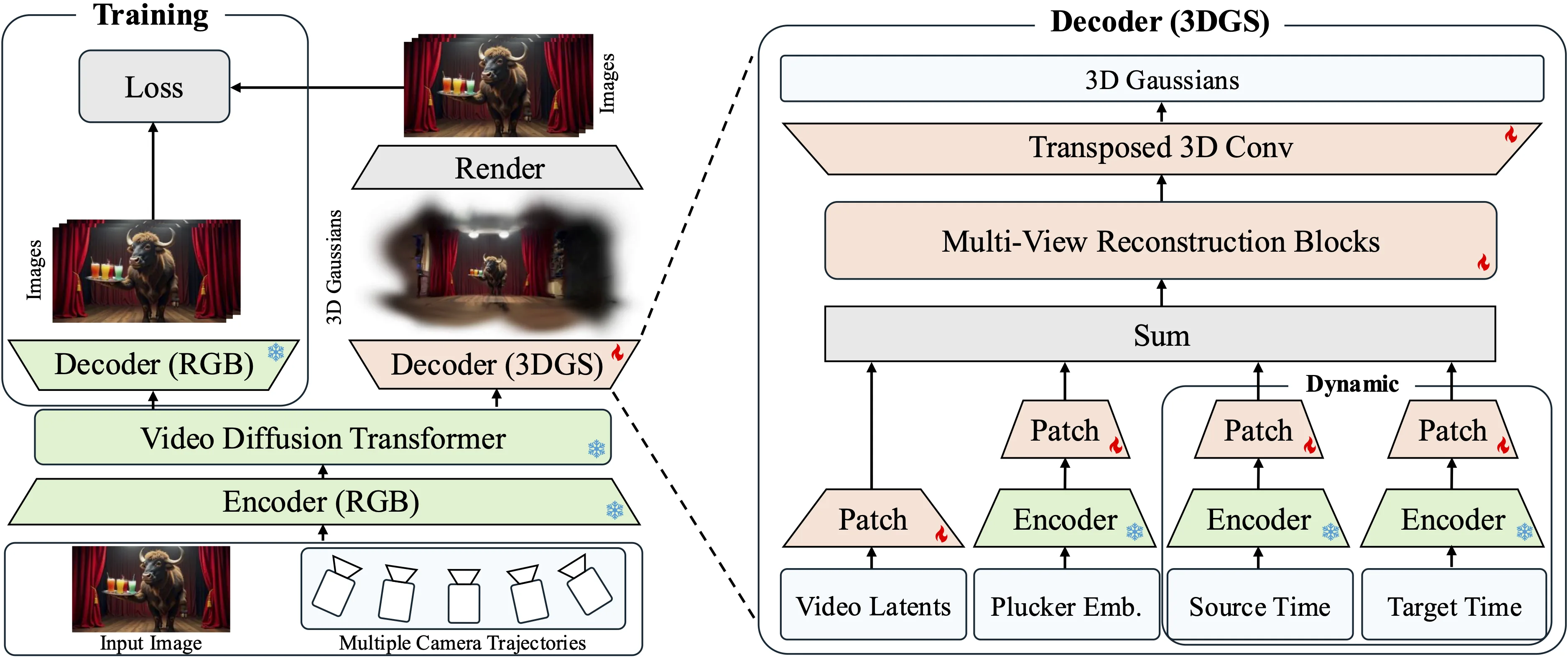
- The architecture leverages a Wan 2.1-14B video foundation backbone with 4-step DMD distillation, generating 3D Gaussian splatting (.ply) assets for Isaac Sim simulation.
Licensing breakdown: Apache 2.0 repository code vs. research-only weights
NVIDIA Research’s publication of Lyra 2.0 has gained widespread traction among 3D graphics engineers and computer vision practitioners. However, technical analysis reveals a critical legal trap: technology blogs have broadly circulated claims that Lyra 2.0 is 100% open-source and free for unrestricted commercial use. This assertion confuses software code licensing with trained model weight distribution.
While the GitHub repository (nv-tlabs/lyra) containing pipeline scripts and ComfyUI nodes is licensed under permissive Apache 2.0, the core pretrained weights hosted on Hugging Face are governed strictly by the NVIDIA Internal Scientific Research and Development Model License. Section 2 of this license explicitly restricts usage to non-commercial academic research, barring deployment in commercial SaaS, public redistribution, and generating commercial 3D assets.
Under the hood: 4-step DMD distillation and Wan 2.1-14B video foundation
From an engineering standpoint, Lyra 2.0 introduces remarkable breakthroughs in 3D reconstruction speed. Rather than relying on traditional multi-view diffusion models that require dozens of iterative denoising passes, Lyra 2.0 incorporates a 4-step Distribution Matching Distillation (DMD) process. By compressing generation steps from 35 down to 4, the model synthesizes complete 3D assets in seconds.
The architecture uses the open-weight Wan 2.1-14B video foundation model as its structural prior, conditioning latent representations on a 480x832 input image and projecting consistent spatial radiance fields across 81 temporal frames. This enables consistent multi-angle reconstruction of occluded surfaces.
Simulation assets: Exporting .ply Gaussian splats into NVIDIA Isaac Sim
Unlike traditional text-to-3D models that output textured polygon meshes (.obj or .fbx), Lyra 2.0 outputs high-density 3D Gaussian splatting point clouds (.ply) paired with volumetric collision hulls. This output format is optimized specifically for integration into robotics simulation environments like NVIDIA Isaac Sim and Omniverse.
Robotics developers can rapidly convert single photographs of real-world objects into interactive, physically interactive simulation assets. Teams evaluating Lyra 2.0 for commercial games or commercial virtual reality production, however, must pursue custom enterprise licensing with NVIDIA before releasing production assets.
Sources: Lyra 2.0 GitHub Repository & Source Code Licensing|NVIDIA T-Labs ↗ NVIDIA Model Weights & Research License Repository|Hugging Face ↗
THE BROADER CONTEXT · FRONTIER LABS DOSSIER
Explore full product specifications, pricing analysis, and continuous coverage in the Frontier Labs Desk Hub and Others Dossier. Independent benchmarks available on the AI Intelligence Index and Coding Agents Leaderboard.