Word Error Rate (WER) Explained: How to Read Speech-to-Text Leaderboards
Word Error Rate equals (Substitutions + Deletions + Insertions) / N—explaining what qualifies as a good WER across studio vs noisy calls, why cross-dataset scores mislead, and how Hugging Face Open ASR differs from Artificial Analysis AA-WER.
THE STORY IN THREE POINTS
- What is a good Word Error Rate depends on domain noise: studio read speech like LibriSpeech Clean reaches <2% WER, balanced multi-domain Open ASR averages sit near 5.6%–7.8% for leading models, while real telephony and overlapping meetings routinely hit 8%–15%+.
- WER follows (S + D + I) / N against ground-truth reference words N—meaning runaway insertion hallucinations can push WER past 100%, while Whisper-style text normalization (casing, punctuation, number expansion) shifts leaderboard scores before diffs run.
- Hugging Face’s Open ASR Leaderboard tests downloadable open checkpoints across eight ESB datasets (LibriSpeech, AMI, Earnings22, VoxPopuli, GigaSpeech, Common Voice, TED-LIUM, SPGISpeech), whereas Artificial Analysis AA-WER v2.2 weights commercial APIs across AgentTalk, VoxPopuli, and Earnings22 alongside RTFx speed and price.
What is a good Word Error Rate—and the WER formula worked out
Engineers comparing the best speech to text models immediately ask what is a good word error rate for production transcripts. In practice, a "good" WER depends almost entirely on acoustic conditions and vocabulary density: on clean read audiobooks (LibriSpeech test.clean), top models post <2% WER (Canary-Qwen 2.5B reaches 1.6%); across balanced multi-domain averages, 5%–8% signals top-tier accuracy (5.63% Canary-Qwen 2.5B, 5.85% Granite Speech 3.3 8B, 7.4% Whisper Large V3); while messy real-world call centers, accented multi-speaker meetings, and earnings calls commonly cluster around 8%–15% WER before domain adaptation or phrase biasing (exceeding 20% creates heavy manual editing drag).
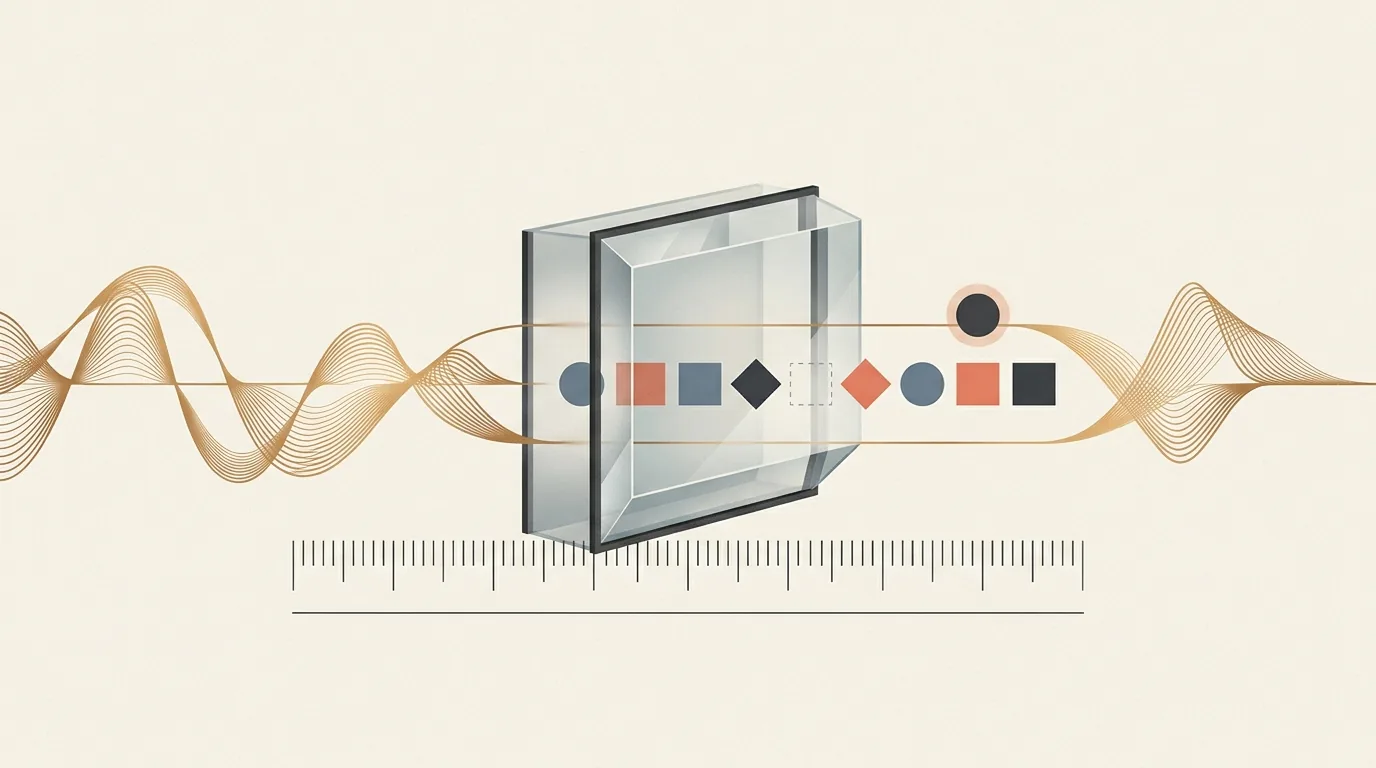
Mathematically, word error rate formula calculation divides minimum word-level Levenshtein edits against reference length N: WER = (S + D + I) / N, where S counts Substitutions (wrong words), D counts Deletions (omitted words), I counts Insertions (hallucinated extra words), and N is the total number of ground-truth reference words. For example, if ground truth is "the cat sat on the mat" (N = 6) and a model predicts "the cat sit on the" (1 substitution sat -> sit, 1 deletion mat, 0 insertions), WER equals (1 + 1 + 0) / 6 = 33.3%. Notice two statistical quirks: because insertions I sit only in the numerator, severe audio-silence hallucinations can drive WER above 100%, and unsegmented scripts like Mandarin Chinese evaluate Character Error Rate (CER) instead.
Why different datasets, text normalization, and hidden latency break naive comparisons
Comparing raw word error rate Whisper numbers posted in one blog against another vendor’s claim fails for three methodological reasons. First, dataset difficulty swings more widely than model gaps: evaluating a checkpoint on quiet 16 kHz LibriSpeech audio versus fast corporate Earnings22 calls or overlapping AMI meeting microphones can swing WER by 5x on identical weights. You can never compare an unweighted LibriSpeech score against an Earnings22 average.
Second, text normalization transforms strings before error counting via jiwer: both Hugging Face’s Open ASR Leaderboard and commercial graders pass references and hypotheses through Whisper’s English normalizer—lowercasing letters, stripping punctuation, collapsing whitespace, and converting spelled numbers ("twenty four" vs "24"). That hides real-world punctuation errors, proper-noun casing quality, and timestamps that enterprise subtitle pipelines still have to fix. Third, headline WER tables say zero about throughput (Real-Time Factor RTFx), streaming time-to-first-token, speaker diarization accuracy, or dollar cost per hour.
Open ASR Leaderboard vs Artificial Analysis AA-WER and my ai daily coverage
Distinguishing the two dominant speech to text leaderboard hubs explains why model rankings reorder. Hugging Face’s Open ASR Leaderboard benchmarks downloadable checkpoints uniformly across eight ESB splits (LibriSpeech Clean and Other, Common Voice, VoxPopuli, TED-LIUM, GigaSpeech, SPGISpeech, Earnings22, and AMI meetings) paired with batch RTFx—rewarding open-weight accuracy and local speed. Conversely, Artificial Analysis’s AA-WER v2.2 Index computes a duration-weighted average over ~8 real-world audio hours (50% AA-AgentTalk, 25% VoxPopuli-Cleaned-AA, 25% Earnings22-Cleaned-AA) specifically to audit commercial API endpoints (OpenAI, Deepgram, Microsoft AI, ElevenLabs, Speechmatics) on live API speed and USD per 1,000 audio minutes—sometimes chunking long files to ~30 seconds or ~9 minutes where endpoints impose duration ceilings.
On my ai daily, legacy single-page URLs (such as /word-error-rate/) have been consolidated into our unified Leaderboards Hub, complemented by dedicated model audits covering OpenAI Whisper Alternatives (Canary-Qwen 2.5B, Parakeet TDT, Whisper V3 Turbo), Microsoft AI’s MAI-Transcribe-2 ($0.10/hr Batch vs $0.54/hr Streaming), and DeepSeek’s standalone 21-language ASR tool API.
Sources: Open ASR Leaderboard (ESB Datasets & Normalizer Methodology)|Hugging Face Spaces ↗ ESB Benchmark Sorted Evaluation Suite Dataset Card|Hugging Face ↗ Artificial Analysis Word Error Rate Index (AA-WER v2.2)|Artificial Analysis ↗ Best Open Source Speech-to-Text Benchmarks (WER, RTFx & Datasets)|Northflank ↗
THE BROADER CONTEXT · FRONTIER LABS DOSSIER
Explore full product specifications, pricing analysis, and continuous coverage in the Frontier Labs Desk Hub and Others Dossier. Independent benchmarks available on the AI Intelligence Index and Coding Agents Leaderboard.