Artificial Analysis Index v4.1.1 & Agent Arena Explained: Why Cross-Version Scores Don’t Compare
Navigating benchmark methodology shifts from AA Index v4.0 to v4.1.1 and differentiating Arena’s causal net-improvement Agent Arena from DesignArena’s Elo leaderboard.
THE STORY IN THREE POINTS
- Artificial Analysis upgraded its Intelligence Index from v4.0 (10 benchmarks) to v4.1.1 and v5.0.1 (9 benchmarks, replacing IFBench with tau3-Banking and updating to GPT-5.6 Luna grader), making cross-version scores mathematically non-comparable.
- Inkling 2 Small’s score of 31 and Kimi K3.1 Pro’s score of 55 reflect different evaluation suites and should only be compared against peer models evaluated within the exact same index snapshot.
- Two prominent "Agent Arena" leaderboards exist: Arena’s causal inference tracking (ranking Kimi K3.1 Pro #13 with +5.1% net improvement) and DesignArena’s pairwise Elo ladder (ranking Kimi #3 at 1276 Elo).
The structural shift from Index v4.0 to v4.1.1 and v5.0.1
Technology publications comparing newly announced AI models frequently cite composite scores from Artificial Analysis without accounting for underlying methodology revisions. In late 2026, Artificial Analysis restructured its flagship Intelligence Index, moving from the ten-evaluation v4.0 baseline to the refined nine-evaluation v4.1.1 and v5.0.1 suites.
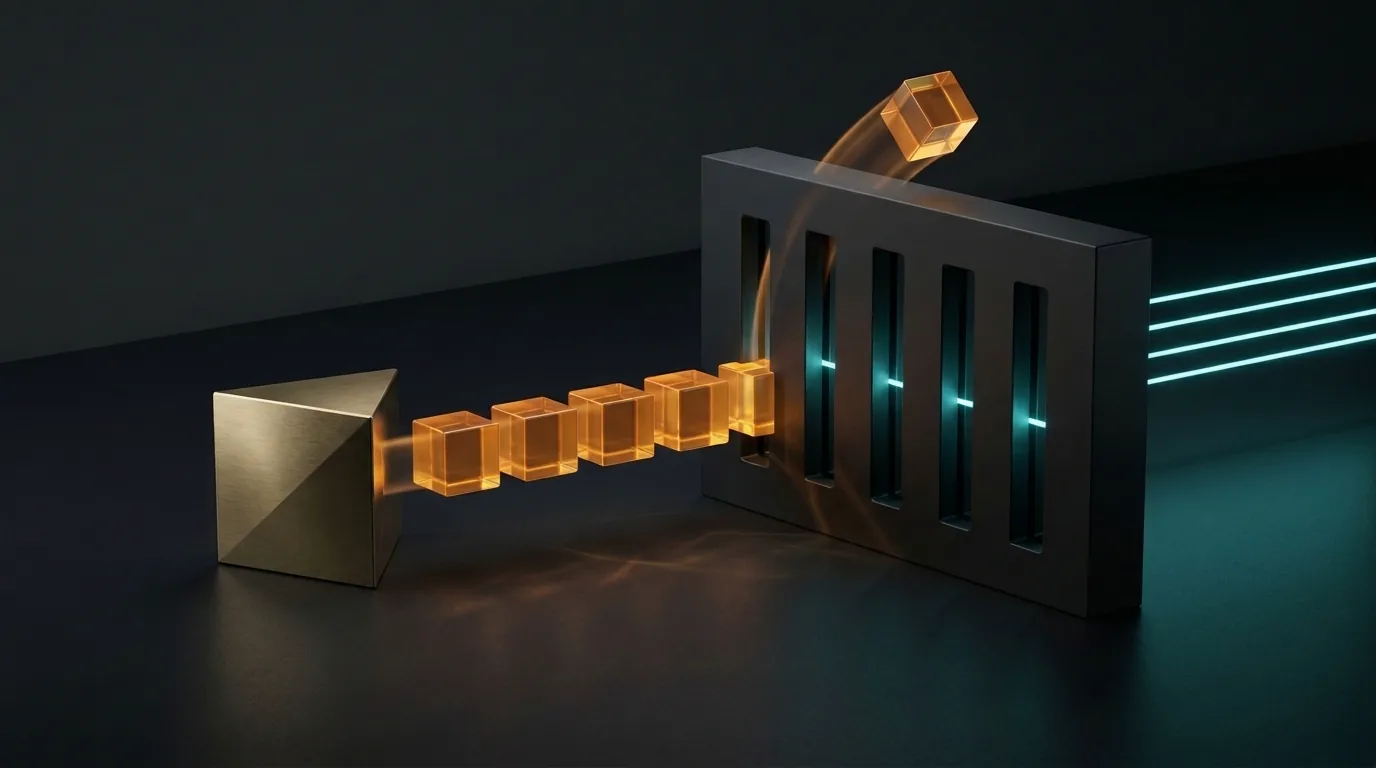
The update retired IFBench, substituted tau2-Bench Telecom with tau3-Banking, upgraded Terminal-Bench to v2.1, and standardized automated evaluation graders on GPT-5.6 Luna medium. Because the evaluation weighting and problem sets changed fundamentally, models scored under v4.0 cannot be numerically subtracted from models evaluated under v4.1.1.
Why subtracting scores across different benchmark releases fails
A pervasive error in recent AI commentary involves directly comparing Inkling 2 Small’s score of 31 with Kimi K3.1 Pro’s score of 55, asserting a 24-point performance gulf. In reality, Kimi’s score reflects self-reported vendor submissions under older methodology criteria, whereas Inkling’s score was measured independently under the strict v5.0.1 battery.
To accurately interpret benchmark standing, readers must verify whether reported scores carry vendor-reported labels ("claimed by AI Lab, not independently verified") and ensure comparisons occur strictly within synchronized snapshot tables.
Disambiguating Arena’s causal tracking from DesignArena’s Elo ladder
Confusion also surrounds rankings from "Agent Arena," where conflicting reports placed Kimi K3.1 Pro simultaneously at #3 and #13. This divergence stems from two distinct evaluation platforms using identical terminology.
LMSYS Arena’s official Agent Arena utilizes randomized causal inference and telemetry logs from 17,500 real-world sessions, measuring net improvement over average baselines (+5.1% for Kimi K3.1 Pro, ranking #13 overall). In contrast, DesignArena’s Agents Arena operates a pairwise Elo ladder where community developers vote between paired executions, awarding Kimi 1276 Elo points for a #3 placement. Understanding this distinction prevents conflating observational causal metrics with subjective head-to-head preference.
Index v5.0.1: 119 models, 25% category weighting, and Claude Fable 5.2 at 65
In its November 2026 release of Intelligence Index v5.0.1, Artificial Analysis expanded the evaluation to 119 frontier models, organizing assessments across four equal 25% quadrants: Knowledge Work, Coding, Science, and General Reasoning. The rubric incorporates nine benchmarks including AA-Briefcase v1.1, AutomationBench-AA, Terminal-Bench 4.0, FrontierCode-AA 2.0, AA-Omniscience v1.1, GDP.pdf, HLE-Diamond, CritPt v2 Hard, and Terminal-Bench-Science 0.1.
Under this comprehensive battery, Anthropic’s Claude Fable 5.2 (Max effort) captured the #1 overall position with a composite score of 65 ($9.08 per task), surpassing Gemini 4 Carbon (High effort) at 60 and Claude Opus 5.5 (Max effort) at 59.1. Because roughly 60% of test queries now utilize private held-out test sets to resist memorization, v5.0.1 scores provide the most contamination-resistant baseline for modern LLM evaluation.
Sources: Artificial Analysis Intelligence Index Methodology & Version Changelog|Artificial Analysis ↗ Arena Agent Evaluation Framework: Causal Inference in Real-World Sessions|Arena Research ↗
THE BROADER CONTEXT · FRONTIER LABS DOSSIER
Explore full product specifications, pricing analysis, and continuous coverage in the Frontier Labs Desk Hub and Others Dossier. Independent benchmarks available on the AI Intelligence Index and Coding Agents Leaderboard.