Agent Leaderboards Compared: LMSYS Agent Arena, DesignArena Elo, and the Vals Index
Navigating AI agent benchmarks requires distinguishing between crowdsourced Elo face-offs, session log causal inference, and enterprise task completion evaluations across leading evaluation boards.

THE STORY IN THREE POINTS
- Arena’s Agent Arena evaluates models via causal inference and net improvement rates across real-world session logs, while DesignArena’s Agents Arena calculates pairwise Elo ratings.
- A single model can hold conflicting ranks across boards: Kimi K3.1 Pro ranks #3 (1276 Elo) on DesignArena but #13 on Arena’s Agent Arena (+5.1% net improvement, #1 on Bash reliability).
- Emerging enterprise benchmarks like the Vals Index v2 and BioBasicsBench introduce rigorous domain-specific task verification for high-assurance agent deployments.
Methodological clash: Causal log tracking vs. pairwise Elo battles
Technology reporting frequently announces that a new foundation model has "captured top ranking on the agent leaderboard," but closer examination reveals that media outlets regularly conflate two entirely distinct evaluation platforms: Arena’s Agent Arena (operated by LMSYS) and DesignArena’s Agents Arena. The methodologies underpinning these boards represent opposite philosophies of agent measurement.
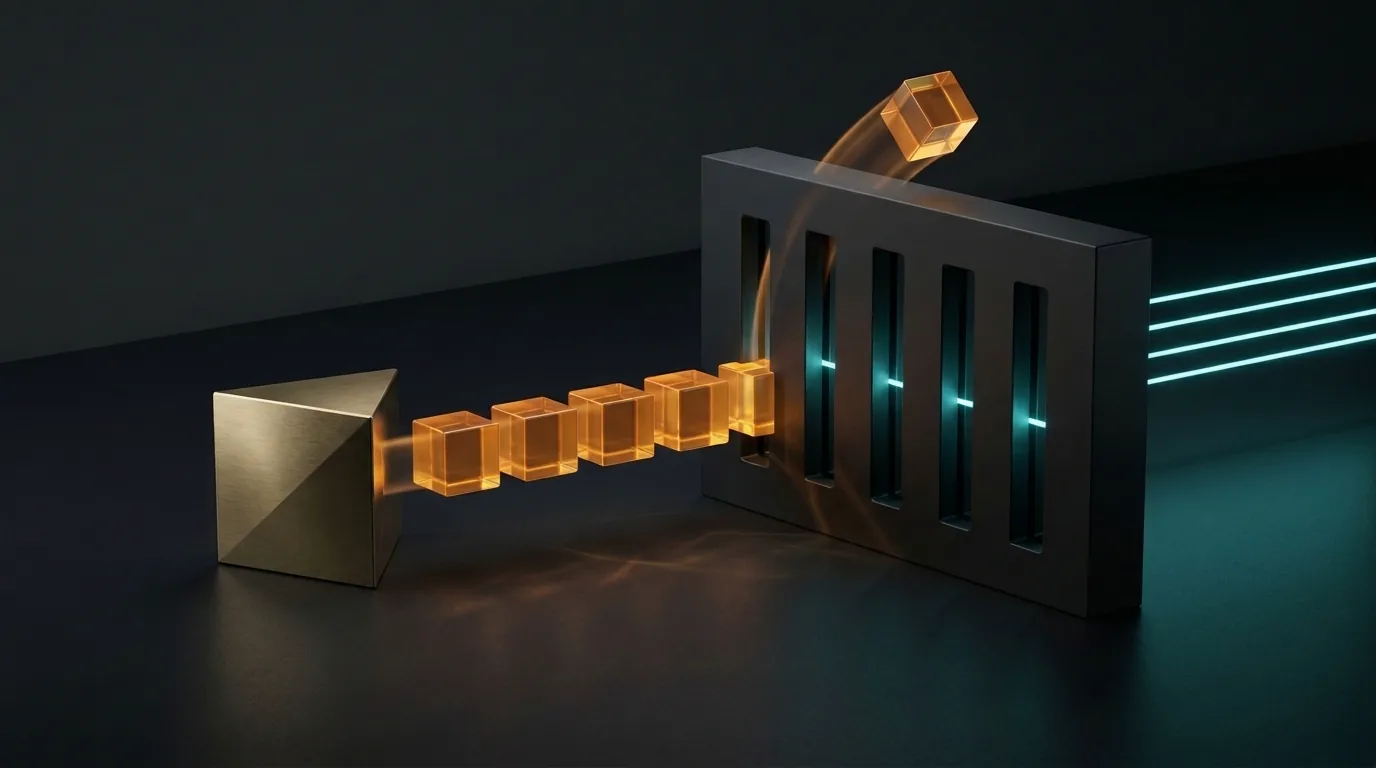
DesignArena operates a classic pairwise Elo voting system, where human evaluators inspect dual agent runs and vote on preference, computing standard Bradley-Terry ratings. Conversely, LMSYS’s Agent Arena does not ask humans to vote. Instead, it ingests multi-turn execution logs from real-world coding and terminal sessions, measuring objective signals—such as explicit user corrections, shell command failure rates, and task completion flags—to compute randomized causal inference and Net Improvement Rates.
Why one model occupies two completely different ranks
Because these evaluation architectures measure different characteristics, model rankings diverge sharply between them. A textbook case is Moonshot AI’s Kimi K3.1 Pro. On DesignArena’s Agents Arena, human voters awarded Kimi K3.1 Pro an Elo rating of 1276, placing it at #3 globally behind only Claude Opus 5.5 and GPT-6 Astra.
On Arena’s Agent Arena, however, analyzing 17,500 real-world sessions placed Kimi K3.1 Pro at #13 in overall Net Improvement (+5.1%), while simultaneously scoring #1 in Bash Command Reliability (+7.9%) and steerability (+6.5%). While human voters favored Kimi’s articulate explanations on DesignArena, causal session analysis revealed occasional script execution hurdles during long-horizon workflows.
Enterprise benchmarks: Vals Index v2 and BioBasicsBench
To move beyond general chat evaluations, enterprise teams increasingly rely on specialized task-oriented evaluations. The Vals Index v2 evaluates agents on complex software operations, multi-file refactoring, and regression test authoring across private enterprise codebases. Similarly, OpenAI and Ligo’s BioBasicsBench evaluates biological and life-sciences agents across 100 rigorous tasks and 18,500 execution runs.
On BioBasicsBench, GPT-6 Astra demonstrated a 66.7% success rate compared to GPT-5.6 Sol at 43.8%. For engineering directors selecting autonomous agents, consulting multi-dimensional benchmarks provides far more actionable telemetry than relying on single aggregate Elo leaderboards.
Sources: Agent Arena Causal Log Evaluation Methodology|Arena AI ↗ Vals Index Enterprise AI Evaluation Suite|Vals AI ↗
THE BROADER CONTEXT · FRONTIER LABS DOSSIER
Explore full product specifications, pricing analysis, and continuous coverage in the Frontier Labs Desk Hub and Others Dossier. Independent benchmarks available on the AI Intelligence Index and Coding Agents Leaderboard.